Vehicles & Fleet Management
Resources 1-7
Get your business on the road with work trucks, vans, insurance, and fleet technology
 1
Work Trucks (New)
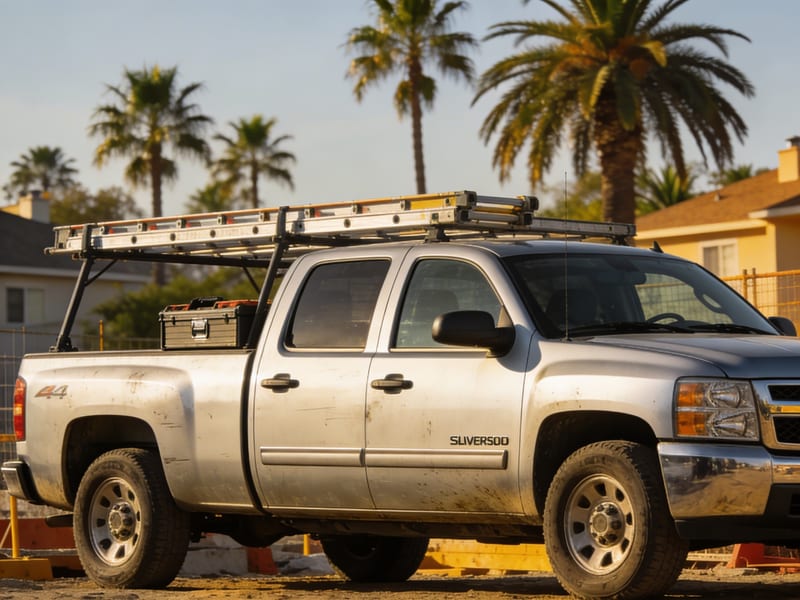
New F-150, Silverado, Ram, Tacoma, or Tundra work trucks. Essential for hauling tools, materials, and towing trailers.
Do It Yourself
- 1Decide on your truck needs: payload capacity (half-ton vs three-quarter-ton), bed length (6.5 ft vs 8 ft), and whether you need 4WD for job sites.
- 2Check manufacturer websites (Ford.com, Chevrolet.com, Ram.com, Toyota.com) for current incentives and build-and-price tools to compare MSRP.
- 3Visit at least 3 dealerships and ask for their fleet/commercial pricing — mention you are a licensed CA contractor buying for business use.
- 4Get pre-approved for financing through your bank or credit union BEFORE visiting the dealer. Dealer financing is usually 1-3% higher APR.
- 5Negotiate using out-the-door price (not monthly payments). Ask about commercial upfit packages that include toolboxes, bed liners, and tow packages.
- 6Register the vehicle under your business name (LLC or Corp) at the CA DMV. Keep the purchase receipt for your tax deduction (Section 179 or bonus depreciation).
 2
Work Trucks (Used)
Quality used pickups (2-6 years old) for contractors starting out or expanding their fleet affordably.
Do It Yourself
- 1Search CarGurus.com, Autotrader.com, and Facebook Marketplace for used work trucks within 100 miles. Filter for 2-6 years old, under 80K miles.
- 2Check the VIN on NMVTCI.gov (free) for title history — look for flood damage, salvage titles, or odometer rollback. Run a Carfax or AutoCheck report ($40).
- 3Inspect in person: check the frame for rust, test the 4WD if equipped, look under the bed for corrosion, and verify the tow package works.
- 4Get a pre-purchase inspection from an independent mechanic ($100-$200). Worth every penny — they will catch transmission issues and frame damage.
- 5Negotiate based on KBB.com or Edmunds.com fair market value. Private party sales are usually $2K-$5K cheaper than dealer lots.
- 6If buying from a private seller, meet at a bank to handle payment. Do a DMV title transfer within 10 days and update your insurance before driving it to a job site.
 3
Work Vans & Upfitting
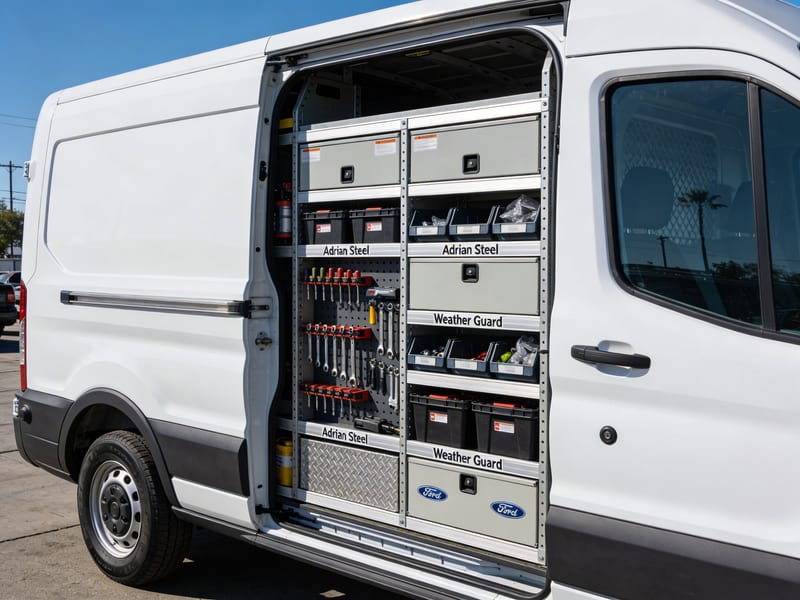
Ram ProMaster, Ford Transit, Mercedes Sprinter cargo vans with professional shelving and organization systems.
Do It Yourself
- 1Compare the three main cargo vans: Ford Transit (best ceiling height), Ram ProMaster (front-wheel drive, lower floor), Mercedes Sprinter (longest lifespan, highest cost).
- 2Buy the van first, then upfit separately — dealer-installed upfits cost 30-50% more than aftermarket. Get the van as a bare cargo model.
- 3For shelving: order Adrian Steel or Weather Guard kits directly from their websites. Most kits are bolt-in and can be installed in a weekend with basic tools.
- 4Measure your most-used tools and materials BEFORE ordering shelving. Sketch a layout — put heavy items low, frequently grabbed items at waist height.
- 5Install a partition wall between cab and cargo area (safety requirement if carrying unsecured loads). Weather Guard and Adrian Steel sell bolt-in partitions.
- 6Add LED interior lighting (Amazon, $30-$60), a heavy-duty rubber floor mat, and tie-down anchors. These three upgrades make the van 10x more functional.
 4
Vehicle Wraps & Lettering
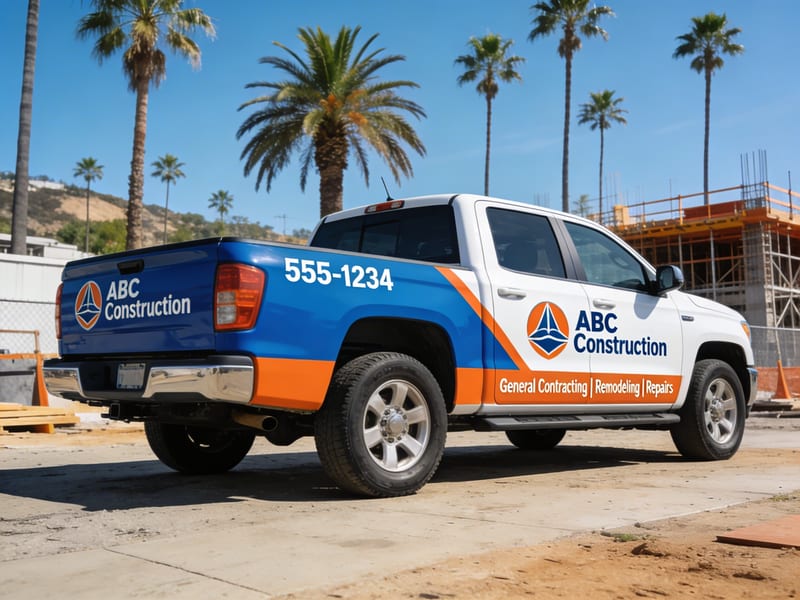
Full/partial wraps, cut vinyl logos, and DOT/CA number lettering. Mobile advertising and brand legitimizer.
Do It Yourself
- 1Start with door lettering and CA license number (legally required if advertising on your vehicle). Budget $150-$400 for professional cut vinyl from a local sign shop.
- 2Search Google Maps for "vehicle wrap shop near me" and check Google reviews. Visit 2-3 shops — ask to see finished trucks, not just portfolios.
- 3For the design: provide your logo as a vector file (.AI, .EPS, or .SVG). If you only have a JPEG, most wrap shops can recreate it for $50-$150.
- 4Full wraps cost $2,500-$5,000+. If budget is tight, start with a partial wrap (doors + tailgate) for $800-$1,500 — still highly effective for brand visibility.
- 5Make sure your wrap includes: business name, phone number, website, CA license number, and one line about what you do. Keep it clean and readable from 30 feet away.
- 6Get a written warranty from the shop (3-5 years for quality vinyl). Avoid cheap vinyl — it fades and peels within a year in California sun.
 5
Commercial Auto Insurance
Liability and physical damage coverage for work trucks and vans. Legally required for financed vehicles and most contracts.
Do It Yourself
- 1Get quotes from at least 3 insurers: call NEXT Insurance, Progressive Commercial, and one local independent agent who writes commercial auto policies.
- 2Know your coverage needs: most CA contractors need $1M combined single limit liability, comprehensive, and collision. Higher limits if towing trailers.
- 3Bundle commercial auto with your general liability policy for 10-15% discount. Ask each agent about a Business Owners Policy (BOP) that includes both.
- 4List all drivers on the policy — unlisted drivers who get in accidents can trigger a claim denial. Include any employees who drive company vehicles.
- 5Ask about discounts: clean driving record, anti-theft devices, GPS tracking, dash cams, and paying the annual premium upfront instead of monthly.
- 6Review your policy every 6 months as you add vehicles. Each new truck needs to be added within 30 days of purchase or you have a coverage gap.
 6
Vehicle GPS & Fleet Tracking
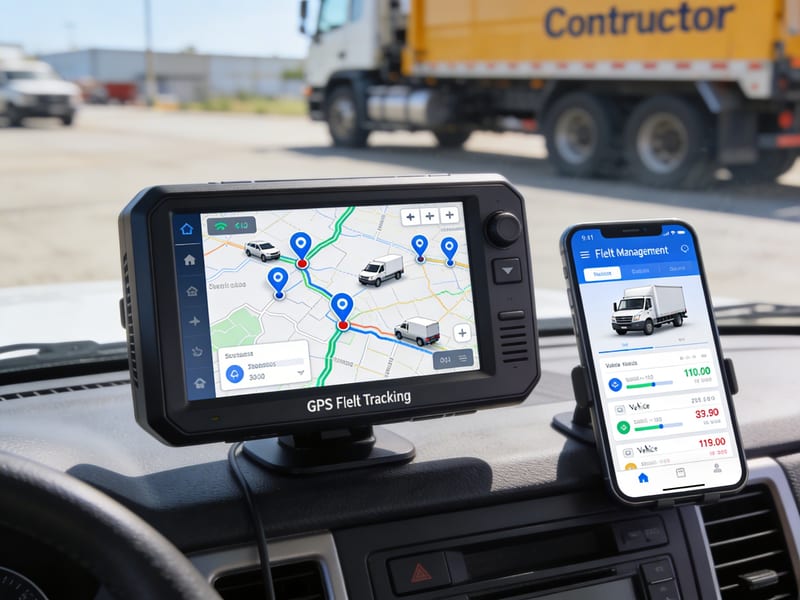
GPS hardware and SaaS for tracking vehicles, driver behavior, and routing. Essential when running multiple trucks.
Do It Yourself
- 1For 1-3 trucks, start with a simple plug-in OBD-II tracker like Bouncie ($8/month) or LandAirSea Overdrive ($25/month). No installation needed — plugs into the diagnostic port.
- 2For more features, compare Samsara, Verizon Connect, and GPS Trackit. Request demos from all three — most offer 30-day free trials.
- 3Decide what you actually need: basic location tracking, or advanced features like driver behavior scoring, maintenance alerts, and route optimization.
- 4If budget is very tight, use the free "Find My" app (iPhone) or Google Maps location sharing as a zero-cost starting point for tracking crew locations.
- 5Install dash cams alongside GPS ($100-$200 each). They protect you in accidents and reduce insurance premiums. Vantrue and Garmin make good commercial options.
- 6Set up geofence alerts around your shop and major job sites so you know when trucks arrive and leave without having to check the app constantly.
 7
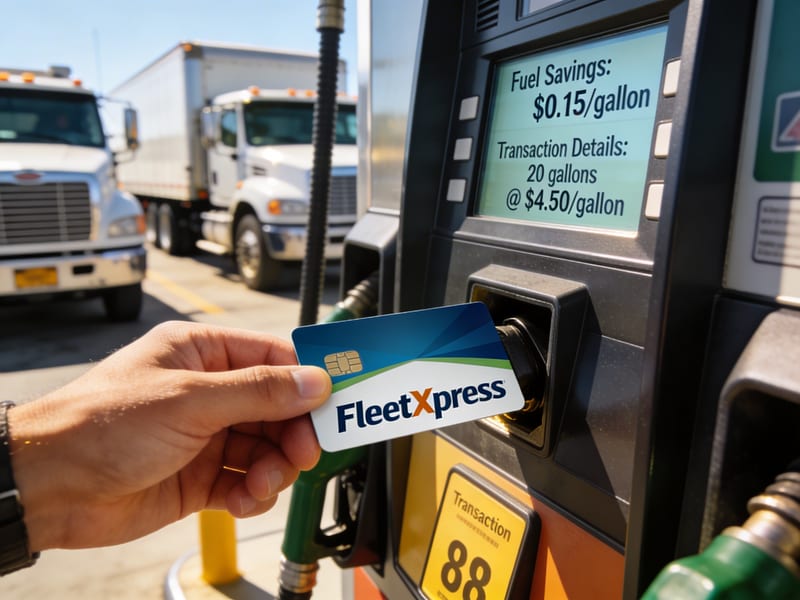
Fleet Fuel Cards
WEX, Fuelman, Shell Fleet fuel cards with 3-7 cents/gallon discounts and expense tracking.
Do It Yourself
- 1Apply directly at WEXInc.com, Fuelman.com, or Shell.us/fleet. Applications take 5-10 minutes and most approve within 48 hours.
- 2Compare the three main benefits: cents-per-gallon discount (typically 3-7¢), expense reporting/tracking, and the ability to set purchase controls per card.
- 3Set spending limits and fuel-only restrictions on each card to prevent misuse. Most programs let you restrict by time of day, gallon amount, and merchant type.
- 4If you only have 1-2 trucks, a cashback credit card with 3-5% on gas (like Chase Ink Business Cash) may save you more than a dedicated fuel card.
- 5Track your monthly fuel spend for 3 months before committing to a program. Some fuel cards have minimum volume requirements that solo operators do not meet.
- 6Keep all fuel receipts digitally (take photos) even with a fuel card — you need them for IRS mileage vs actual expense deduction comparison at tax time.
Tools, Equipment & Materials
Resources 8-13
Power tools, PPE, material accounts, rentals, and storage for every trade
 8
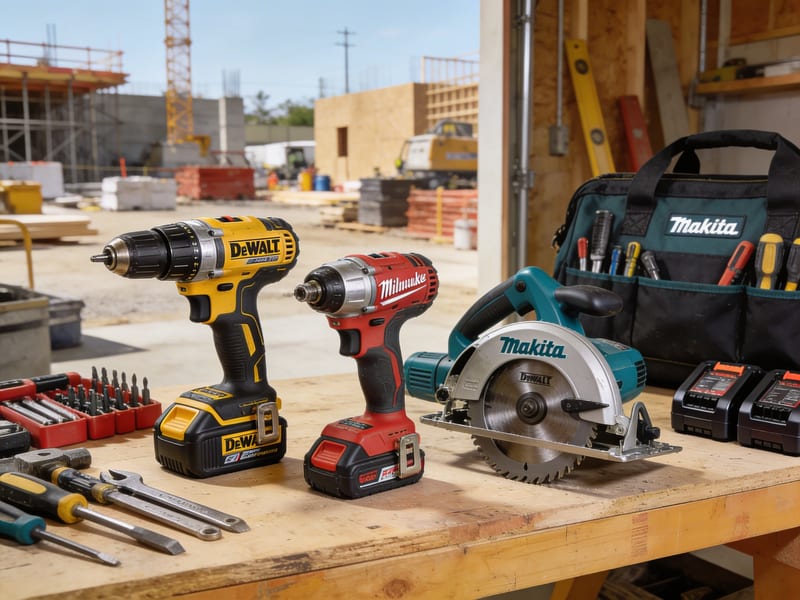
Power Tools (Major Brands)
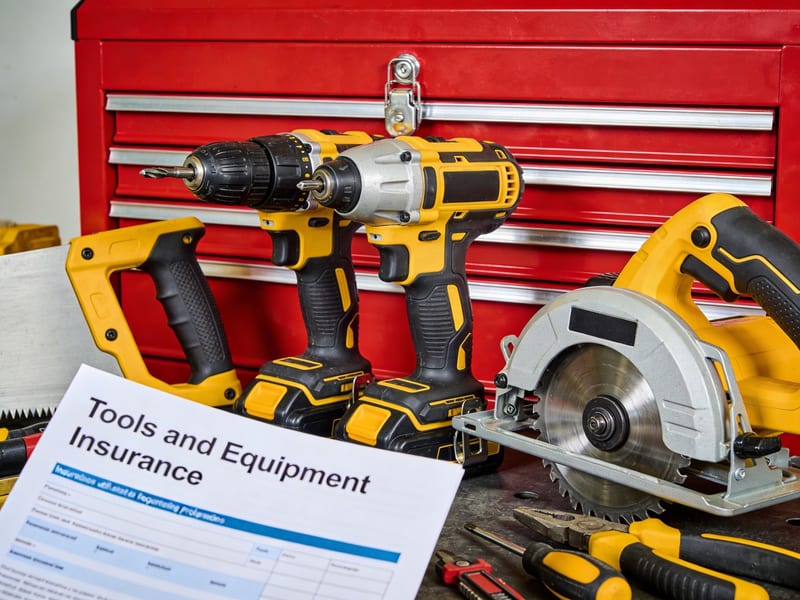
Milwaukee, DeWalt, Makita, Bosch, Hilti cordless systems and hand tools. Expect $2K-$8K spend in year one.
Do It Yourself
- 1Pick ONE battery platform (Milwaukee M18, DeWalt 20V MAX, or Makita 18V LXT) and stick with it. Mixing platforms means buying duplicate batteries and chargers.
- 2Buy combo kits first — a drill/driver + impact driver + circular saw + light kit is $400-$600 and covers 80% of daily tasks. Individual tools cost 40% more.
- 3Wait for holiday sales: Memorial Day, Black Friday, and Father's Day have the deepest discounts (20-40% off). Home Depot and Lowe's rotate brand deals.
- 4Check factory reconditioned tools on the manufacturer's website or CPO Outlets — same warranty, 30-40% cheaper. Milwaukee and DeWalt both sell factory reconditioned.
- 5For specialty tools you use rarely (rotary hammer, pipe threader), rent instead of buying. Home Depot Tool Rental and Sunbelt have daily/weekly rates.
- 6Register every tool for warranty immediately after purchase. Keep receipts in a folder or use an app like Sortly to photograph and catalog your inventory.
 9
Tool Financing & Leasing
Lease or loan products for tools and small equipment. 2-4% of a $20K package = $400-$800 per funded deal.
Do It Yourself
- 1Before financing, check if the tool manufacturer offers 0% APR deals. Milwaukee and DeWalt regularly run 12-24 month interest-free promotions through Home Depot.
- 2Compare financing options: Home Depot Commercial Card (6-24 months 0% on $299+), Lowe's Commercial Account (similar terms), or a personal line of credit from your bank.
- 3Calculate the TRUE cost of financing: a $5,000 tool package at 20% APR for 36 months costs $6,600 total. That extra $1,600 buys a lot of additional tools.
- 4If your credit score is under 650, build credit first with a secured business credit card for 6-12 months before applying for tool financing.
- 5Consider leasing through your business for tax advantages — leased equipment payments are fully deductible as a business expense (vs depreciation for purchased).
- 6Ask the tool supplier about Net 30/Net 60 terms. Once you have an established business with a DUNS number, many industrial suppliers extend trade credit.
 10
Safety Equipment & PPE
Hard hats, safety glasses, hi-vis, harnesses, respirators, gloves, and job-site signage. OSHA-driven, effectively mandatory.
Do It Yourself
- 1Start with the OSHA-required basics for your trade: hard hat ($15-$30), safety glasses ($5-$15), hi-vis vest ($8-$15), work gloves ($10-$25), and steel-toe boots ($80-$150).
- 2Buy PPE at Home Depot, Lowe's, or Grainger.com — avoid Amazon for safety equipment unless it is a verified brand listing. Counterfeit PPE is a real problem.
- 3For respiratory protection: if your work involves dust, silica, paint, or chemicals, you need at minimum an N95 respirator. OSHA requires a written respiratory protection program for anything beyond that.
- 4Fall protection (harnesses + lanyards) is required for work above 6 feet in construction. Buy a quality harness ($80-$150) from 3M, Miller, or Werner. Inspect before each use.
- 5Order in bulk from Uline.com or Zoro.com for consumables (gloves, ear plugs, dust masks, first aid supplies). Bulk pricing saves 30-50% vs retail.
- 6Create a PPE checklist for each job type you do. Post it in your truck and on every job site. OSHA fines start at $16,131 per violation.
 11
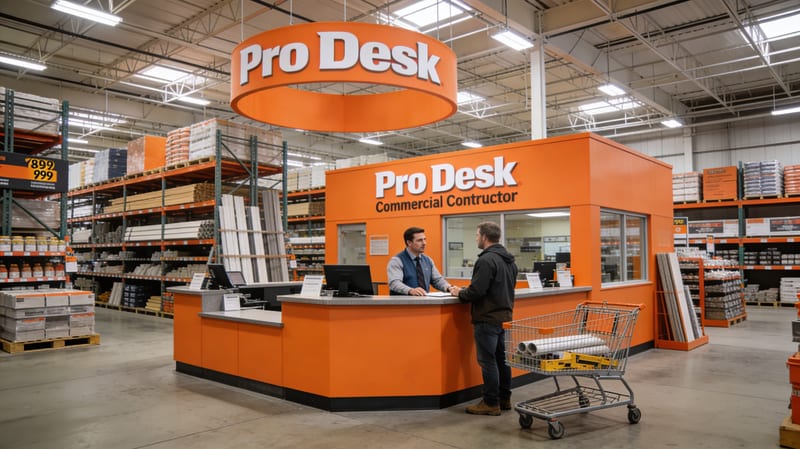
Building Material Accounts (Pro Desks)
Pro/commercial accounts at Home Depot Pro, Lowe's for Pros, 84 Lumber, ABC Supply, Ferguson for better pricing and delivery.
Do It Yourself
- 1Walk into the Pro Desk at your nearest Home Depot or Lowe's with your CSLB license number and business card. Ask to open a Pro account — it takes 15 minutes.
- 2Pro accounts give you: volume pricing (2-20% off), dedicated checkout lines, will-call ordering, and delivery scheduling. No annual fee.
- 3Open accounts at BOTH Home Depot Pro and Lowe's for Pros — they have different pricing on different items. Compare before big purchases.
- 4For specialty materials (structural lumber, commercial plumbing, HVAC supplies), open accounts at 84 Lumber, Ferguson, or your local specialty supplier.
- 5Ask about credit terms: most Pro accounts offer Net 30 billing after 90 days of on-time purchases. This helps cash flow — buy materials now, pay after you collect.
- 6Download the store's Pro app (Home Depot Pro App or Lowe's for Pros App) for in-app pricing, purchase tracking, and reordering your most-used items.
 12
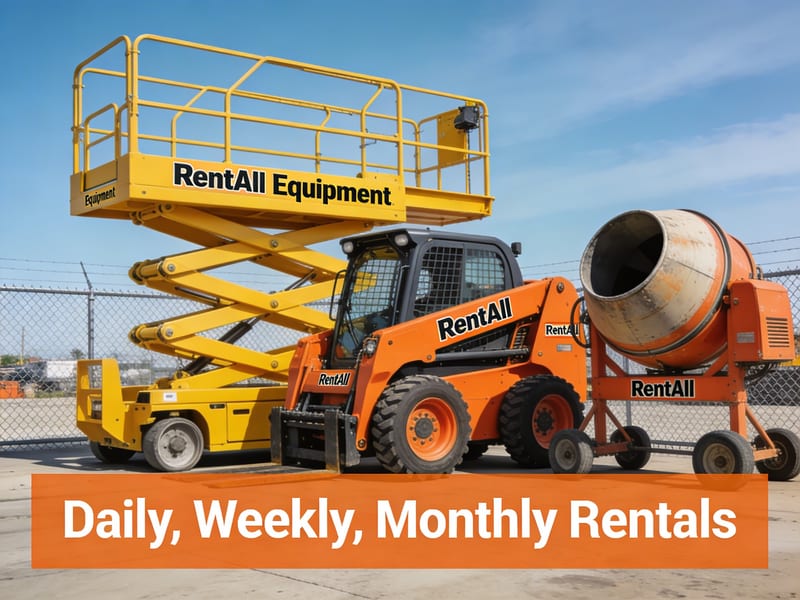
Equipment Rental
Daily/weekly/monthly rental of lifts, skid steers, mixers, and compaction equipment. Renting beats buying early on.
Do It Yourself
- 1Search "equipment rental near me" and compare prices from Sunbelt Rentals, United Rentals, and local independent rental yards. Local yards are often 15-25% cheaper.
- 2Call ahead and reserve equipment at least 24-48 hours before you need it. High-demand items (mini excavators, scissor lifts) book up fast, especially spring through fall.
- 3Ask about weekly and monthly rates — a weekly rate is typically 3x the daily rate (you get 7 days for the price of 3). Monthly is usually 3x the weekly rate.
- 4Before signing the rental agreement: walk around the equipment with the yard manager and photograph any existing damage. This protects you from being charged for pre-existing issues.
- 5Add the rental company's damage waiver ($15-$40/day) for expensive equipment like excavators and boom lifts. One hydraulic hose repair can cost more than the entire rental.
- 6Return equipment clean and on time. Late returns are charged at the daily rate, and dirty equipment gets a cleaning fee ($50-$200). Budget time for cleanup.
 13
Portable Storage & Job Boxes
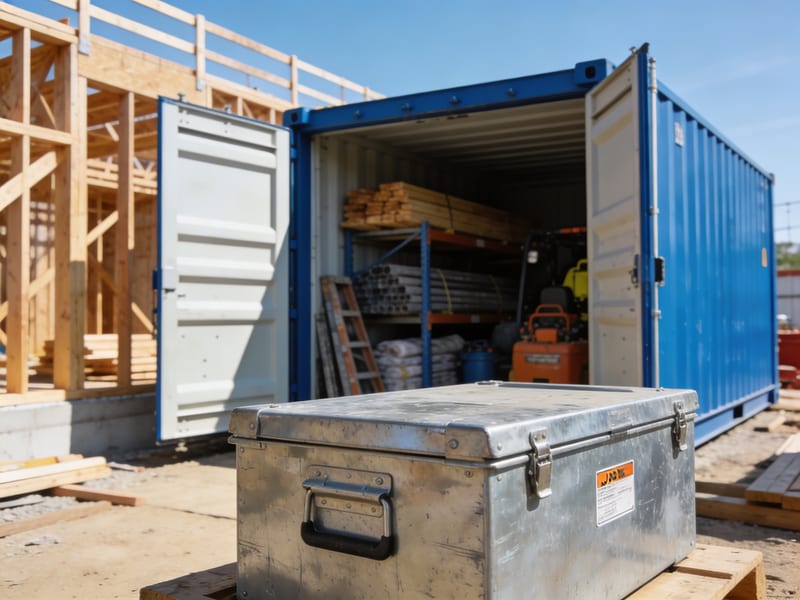
On-site storage containers, PODS-style units, and large job boxes to secure materials and tools on the job.
Do It Yourself
- 1For tool and material security on active job sites, start with a heavy-duty job box (Knaack, Ridgid, or Delta Consolidated) bolted to the trailer or ground. $400-$1,200.
- 2If you need a storage container, search "portable storage container rental near me" on Google Maps. Compare PODS, 1-800-PACK-RAT, and local container companies.
- 3For a cheaper option, buy a used shipping container outright ($2,000-$4,000 for a 20-footer) and have it delivered to your shop or yard. One-time cost vs ongoing rental.
- 4Check local zoning before placing a container on your property — some CA cities require permits for storage containers, especially in residential areas.
- 5Secure any on-site storage with heavy-duty padlocks (American Lock or Master Lock commercial series), and consider a battery-powered trail camera ($50-$80) aimed at your storage.
- 6For short-term project storage, ask the property owner if you can use a garage or room in the building. Saves the rental cost entirely on smaller jobs.
Technology & Software
Resources 14-20
Project management, estimating, accounting, payroll, CRM, phone, and field service software
 14
Project Management Software
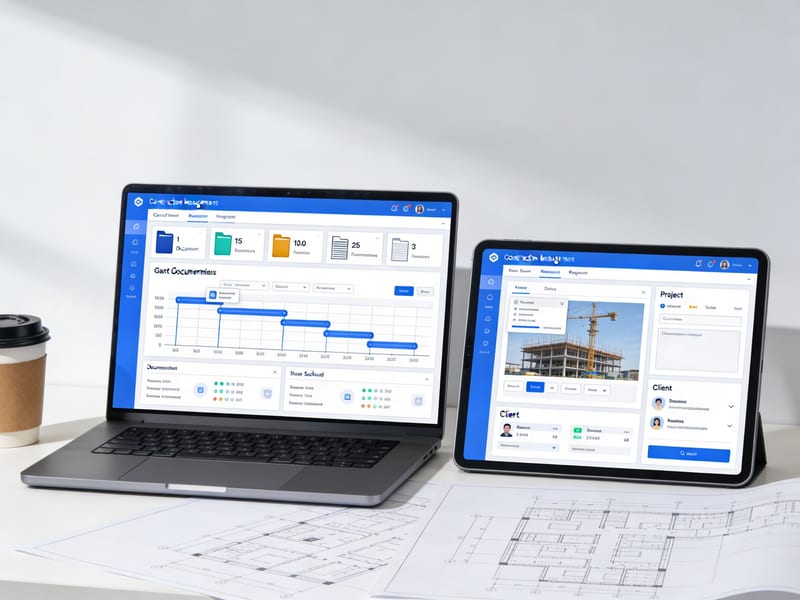
Buildertrend, CoConstruct, Procore for scheduling, docs, and client communication. 10-20% rev-share for 6-12 months.
Do It Yourself
- 1Start free: use Google Sheets for project tracking and Google Calendar for scheduling. Create one spreadsheet per active project with tabs for schedule, budget, and punch list.
- 2For simple Gantt charts, use the free version of Monday.com, Trello, or Asana. They handle task assignments and deadlines for small crews (under 10 people).
- 3Set up a shared Google Drive folder structure: one folder per project, subfolders for photos, contracts, change orders, and drawings. Share with your crew.
- 4For client communication, create a simple project update template in Google Docs. Send weekly updates with photos — clients love this and it prevents disputes.
- 5When you outgrow free tools (usually at 5+ simultaneous projects), try Buildertrend or CoConstruct free trials. Both offer 14-30 day trials to test before committing.
- 6The most important habit is consistent use, not the tool. Whatever you pick, update it daily. A $0 spreadsheet updated daily beats a $400/month platform nobody uses.
 15
Estimating Software
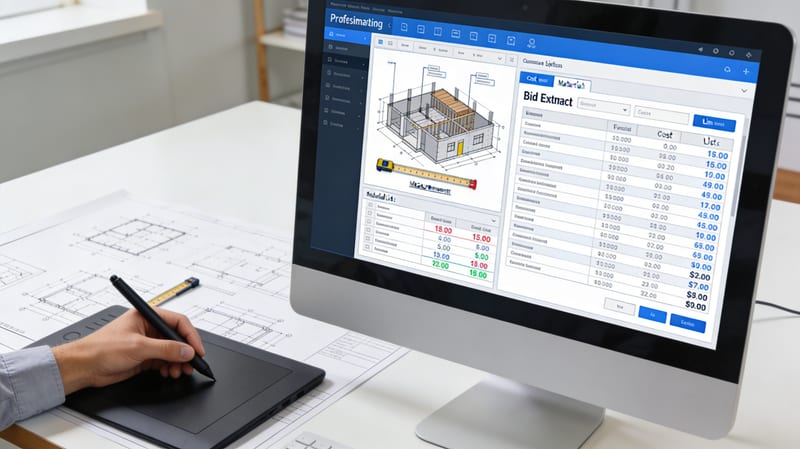
Clear Estimates, STACK, PlanSwift, Xactimate for professional bidding. $100-300/yr per active subscriber.
Do It Yourself
- 1Start with spreadsheet-based estimating: create a master template in Google Sheets with your common line items, labor rates, material costs, and markup percentages.
- 2Build a material price database by saving quotes from your suppliers. Update prices quarterly — material costs in CA change significantly with tariffs and demand.
- 3For labor rates, track your actual hours on the last 5-10 jobs by task type. Use real data, not guesses. Your actual labor costs per task ARE your estimating database.
- 4Include overhead and profit in every estimate: typically 10-20% overhead (insurance, truck, phone, tools) plus 10-20% profit. Most new contractors undercharge because they skip this.
- 5For free estimating tools, try Clear Estimates (free plan, limited estimates) or Joist (free plan, basic features). Both generate professional-looking PDF estimates.
- 6Always estimate in person after a site visit. Never estimate from photos or descriptions alone — you will miss conditions that change the scope by 20-50%.
 16
Accounting Software
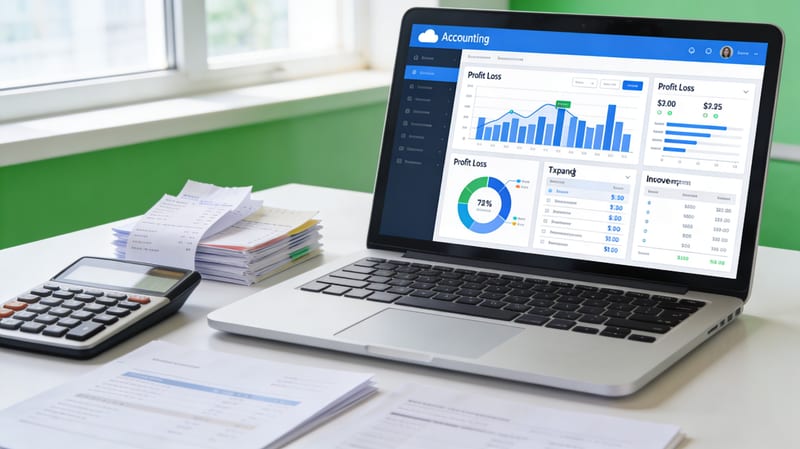
QuickBooks, FreshBooks, Xero, Wave, and done-for-you bookkeeping (Bench). Every contractor needs invoicing and expense tracking.
Do It Yourself
- 1Start with Wave Accounting (100% free, unlimited invoicing, receipt scanning). It handles everything a new contractor needs for the first 1-2 years.
- 2If you need more features, QuickBooks Simple Start is $15/month (often discounted to $7.50 for the first 3 months). It connects to your bank and automates categorization.
- 3Set up your chart of accounts with construction-specific categories: materials, subcontractor payments, equipment rental, fuel, insurance, permits, and labor.
- 4Connect your business bank account and credit card to your accounting software. Auto-categorize transactions weekly — do not let them pile up for months.
- 5Photograph every receipt immediately using your phone camera or the app's receipt scanner. The IRS requires documentation for all business expenses over $75.
- 6Run a Profit & Loss report monthly. If you cannot tell which jobs are profitable and which are not, your accounting setup needs more detail on job costing.
 17
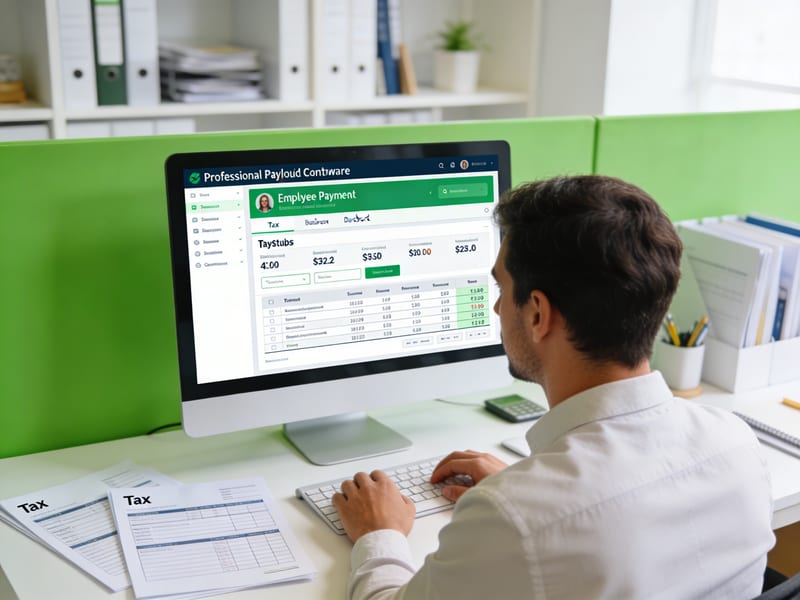
Payroll Services
Gusto, ADP, Paychex, Square Payroll for payroll and filings. Mandatory once they hire W-2 employees. High lifetime value.
Do It Yourself
- 1For 1-2 employees, start with Gusto ($46/month base + $6/employee) or Square Payroll ($35/month + $6/employee). Both handle CA payroll taxes automatically.
- 2Register for a CA employer payroll tax account at EDD.ca.gov (DE-1 form). You need this BEFORE running your first payroll. Processing takes 7-14 days.
- 3Get a Federal EIN at IRS.gov (free, instant online). You need this for all payroll tax filings and W-2s.
- 4Understand CA payroll obligations: state income tax withholding, SDI (State Disability Insurance), unemployment insurance (UI), and employment training tax (ETT).
- 5Set up direct deposit for your employees — it is free through all modern payroll services and employees expect it. Paper checks cost you time and money.
- 6Payroll runs on a schedule: CA requires at least semi-monthly pay periods for most employees. Set it and do not miss it — late payroll has penalties.
 18
CRM & Sales Tools
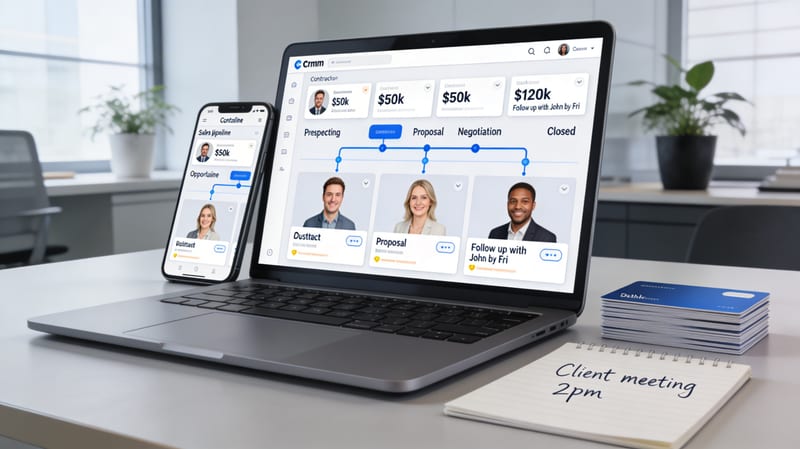
HubSpot, Pipedrive, Salesforce Essentials, Monday.com for pipeline visibility. $50-200 per contractor per year.
Do It Yourself
- 1Start with a free CRM: HubSpot Free CRM (unlimited contacts), or a simple Google Sheets tracker with columns for name, phone, email, project type, status, and follow-up date.
- 2Create a simple lead pipeline with 5 stages: New Lead → Site Visit Scheduled → Estimate Sent → Follow Up → Won/Lost. Move leads through stages daily.
- 3Set phone reminders to follow up on every estimate within 48 hours. Studies show 80% of sales require 5+ follow-ups, but most contractors give up after 1.
- 4Track where your leads come from (referral, Google, Thumbtack, yard sign, etc.). After 6 months, you will know exactly where to spend your marketing dollars.
- 5Save estimate templates for your most common job types. Sending a professional estimate within 24 hours of a site visit wins more jobs than the lowest price.
- 6When you outgrow spreadsheets (usually at 20+ active leads), upgrade to Pipedrive ($15/user/month) or HubSpot's paid tier. Import your spreadsheet data directly.
 19
Phone Systems & Virtual Numbers
Grasshopper, RingCentral, OpenPhone for separating personal from business calls, routing, voicemail, and recording.
Do It Yourself
- 1Get a Google Voice number (free) as your business line. It forwards to your cell, has voicemail transcription, and separates business calls from personal calls.
- 2If you need a local number or toll-free number, OpenPhone ($15/month) or Grasshopper ($14/month) are the simplest options for solo contractors. Both have mobile apps.
- 3Set up a professional voicemail greeting: state your business name, license number, and that you will return calls within 24 hours. Record it in a quiet room.
- 4Enable call recording if legal in your area (CA is a two-party consent state — you MUST inform callers they are being recorded). Useful for dispute resolution.
- 5Set business hours on your phone system so after-hours calls go to voicemail automatically. Answering calls at 10 PM sets bad client expectations.
- 6Add your business number to Google Business Profile, business cards, and vehicle lettering. Never use your personal cell number on any public-facing materials.
 20
Scheduling & Dispatching (Field Service)
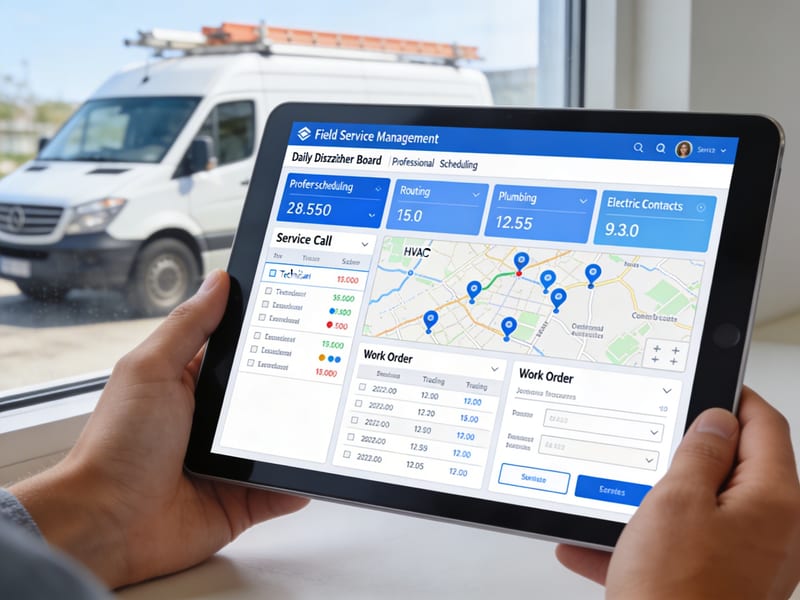
ServiceTitan, FieldEdge, ServiceMax for service-heavy trades (HVAC, plumbing, electrical). High ACV = high commissions.
Do It Yourself
- 1For 1-3 technicians, start with Google Calendar shared calendars (free). Create one calendar per tech, color-coded. Schedule jobs by dragging and dropping.
- 2Use Google Maps 'Saved Lists' to organize job locations. Share lists with techs so they can tap an address and navigate directly.
- 3For dispatching, set up a group text thread or use a free Slack workspace. Post the daily schedule each morning with addresses and job details.
- 4Track job completion with a simple Google Form that techs fill out on their phone: job address, time arrived, time finished, parts used, notes. Data flows to a spreadsheet.
- 5When you hit 5+ techs or 10+ daily jobs, try Jobber ($49/month) or Housecall Pro ($49/month) free trials. Both have scheduling, dispatching, and invoicing built in.
- 6The key metric to track is jobs per tech per day. If a tech averages 3 jobs/day and you can increase to 4 with better routing, that is a 33% revenue increase.
Legal & Compliance
Resources 21-26
Business formation, contracts, lien protection, permits, workers' comp, and OSHA compliance
 21
Business Formation & Registered Agent
LLC/Corp formation, EIN filing, operating agreements, and annual compliance. Recurring registered agent fees.
Do It Yourself
- 1Decide your entity type: LLC is best for most contractors (personal asset protection + tax flexibility). S-Corp election makes sense once you net over $50K/year.
- 2File your LLC online at bizfileOnline.sos.ca.gov. The filing fee is $70. Choose a name, designate an agent for service of process, and submit the Articles of Organization.
- 3Get your EIN (Employer Identification Number) free at IRS.gov — takes 5 minutes online. You need this for bank accounts, tax filings, and hiring.
- 4Write a simple Operating Agreement (single-member LLC template is fine — search 'California LLC Operating Agreement template' for free versions). Keep it in your records.
- 5File a Statement of Information (Form LLC-12) within 90 days of formation at bizfileOnline.sos.ca.gov ($20). Then file every 2 years.
- 6Register for a local business license in your city/county. Requirements vary — check your city clerk's website. Most are $50-$200 annually.
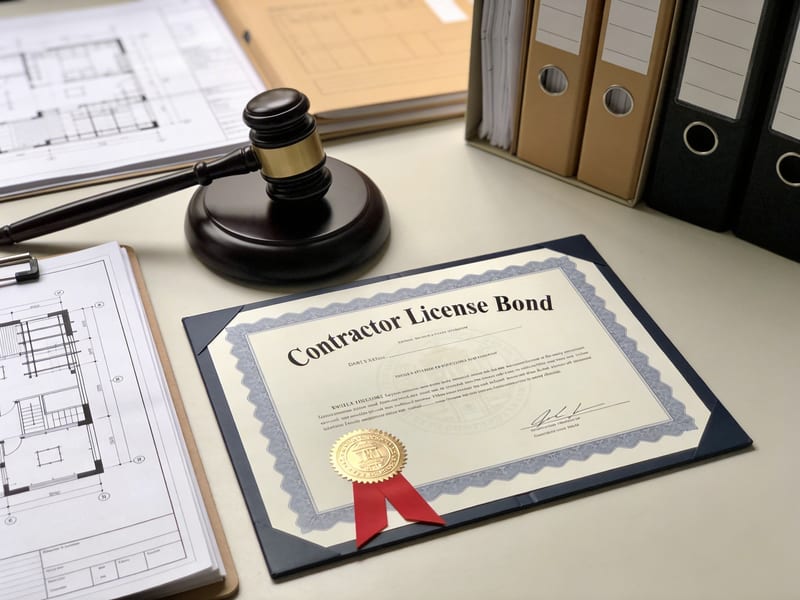
- 7File your CSLB application or update your existing license to show your new LLC as the qualifying entity. CSLB requires this within 90 days.
 22
Contract Templates & Legal Docs
Rocket Lawyer, LawDepot, PandaDoc for contracts, change orders, lien waivers, and sub agreements.
Do It Yourself
- 1Download free California-specific contract templates from the CSLB website (cslb.ca.gov). They have sample home improvement contracts that meet legal minimums.
- 2Every CA home improvement contract over $500 MUST include: contractor name, license number, start/completion dates, scope of work, total price, payment schedule, and the 3-day cancellation notice.
- 3Create your own change order template in Google Docs: description of additional work, cost, how it affects the schedule, and signature lines for both parties.
- 4For lien waivers (conditional and unconditional), download the 4 mandatory CA forms from CSLB. Use the correct form for each progress payment and final payment.
- 5Keep a subcontractor agreement template: scope, pay rate, insurance requirements, and indemnification. Never use a sub without a written agreement.
- 6Save all contracts as PDF and store in Google Drive or Dropbox. Email a copy to the client and keep a signed hard copy in a project folder. CA requires 4-year retention.
 23
Lien Rights & Mechanics Lien Services
Levelset and NCS for managing notices and mechanics liens. Crucial for cash-flow protection that many contractors don't understand.
Do It Yourself
- 1Learn the basics: in CA, you MUST serve a Preliminary Notice within 20 days of first furnishing labor/materials to preserve your lien rights. No exceptions.
- 2Download the CA Preliminary Notice form (20-day notice) from CSLB or search 'California Preliminary Notice form.' Fill it out and send it certified mail with return receipt.
- 3If payment is overdue, send a written demand letter first. State the amount owed, invoice dates, and a 10-day deadline. This resolves 70% of payment disputes without a lien.
- 4To file a mechanics lien: record a Claim of Mechanics Lien at the county recorder's office in the county where the property is located. Filing fee is $15-$75 per document.
- 5You must file the mechanics lien within 90 days after completion of work (for direct contractors) or 90 days after a notice of completion is recorded.
- 6After recording the lien, you have 90 days to file a lawsuit to enforce it. If you do not file suit within 90 days, the lien expires. Consult an attorney for the lawsuit step.
- 7Track all your notice and lien deadlines on a calendar. Missing a deadline by even one day forfeits your rights. Set multiple reminders.
 24
Permit Expediting Services
Third-party firms handling building permit applications in LA, SF, San Diego, and other complex CA jurisdictions.
Do It Yourself
- 1Identify which permit you need by calling your local building department. Describe your project — they will tell you the permit type, required drawings, and fees.
- 2For simple permits (water heater, electrical panel, reroof), many CA jurisdictions allow over-the-counter permits. Walk in, fill out the application, pay the fee, and walk out with the permit.
- 3For larger projects requiring plan review: submit your construction drawings to the building department. Review times vary from 2 weeks (small cities) to 3+ months (LA, SF).
- 4Prepare your plans according to the jurisdiction's checklist (available on their website). Incomplete submittals are the #1 cause of permit delays.
- 5Check your jurisdiction's online portal — many CA cities (LA, Sacramento, San Jose) now accept digital plan submittals and let you schedule inspections online.
- 6Budget for permit fees: typically 1-3% of construction cost. Some jurisdictions also charge plan check fees (65% of the permit fee) and school fees separately.
- 7For complex jurisdictions (LA, SF), consider hiring a permit expediter for the first time, then learn their process so you can do it yourself going forward.
 25
Workers' Compensation Insurance
Mandatory in CA as soon as you hire employees. NEXT Insurance, Employers, biBERK for affordable coverage.
Do It Yourself
- 1In CA, workers' comp is MANDATORY as soon as you hire your first employee (even one part-time worker). Sole proprietors with no employees can self-certify as exempt.
- 2Get quotes from at least 3 sources: NEXT Insurance (online in minutes), State Fund (SCIF — CA's insurer of last resort), and one independent agent who shops multiple carriers.
- 3Your premium is based on your classification code (determines risk level) × your payroll. Accurate payroll estimates keep premiums correct — underestimating triggers an audit surcharge.
- 4Common contractor class codes and approximate rates: carpentry (5403) ~8-12% of payroll, electrical (5190) ~4-6%, plumbing (5183) ~4-7%, roofing (5551) ~15-25%.
- 5Ask about Pay-As-You-Go programs that bill based on actual payroll each pay period instead of estimated annual premium. This helps cash flow for new contractors.
- 6Keep clean safety records — your Experience Modification Rate (EMR) affects your premium. One serious claim can increase your workers' comp cost by 25-50% for 3 years.
 26
OSHA Compliance Services
Written safety programs (IIPP), safety manuals, training, and audits. ClickSafety and 360Training for online courses.
Do It Yourself
- 1Create a written Injury and Illness Prevention Program (IIPP) — this is MANDATORY for ALL California employers. Cal/OSHA has a free template at dir.ca.gov.
- 2Identify the Cal/OSHA standards that apply to your specific trade: fall protection, scaffolding, electrical, excavation, respiratory, heat illness, and confined spaces.
- 3Conduct a job hazard analysis (JHA) for each type of work you do. Document the hazards, controls, and required PPE. Keep JHAs on file and review annually.
- 4Train your employees on safety AT HIRE and at least annually after that. Document all training with dates, topics, trainer name, and employee signatures.
- 5Post the required workplace safety notices: Cal/OSHA poster, workers' comp carrier info, emergency contacts, and your IIPP summary. Available free at dir.ca.gov.
- 6For OSHA 10-Hour and 30-Hour training, take courses online through 360Training.com or ClickSafety.com ($25-$180). Completion cards are mailed within 2-3 weeks.
- 7If Cal/OSHA inspects your job site: be cooperative, do not volunteer extra information, fix any cited hazards immediately, and keep documentation of all corrections.
Financial Products
Resources 27-32
Business banking, credit cards, lines of credit, equipment financing, invoice factoring, and bond financing
 27
Business Bank Accounts
Separate personal and business funds with fintech or traditional bank accounts. Novo, Bluevine, Chase Business, BofA Business.
Do It Yourself
- 1Open a business checking account separate from personal banking. This is non-negotiable — commingling funds can void your LLC liability protection.
- 2Compare free business checking options: Novo (no fees, no minimum), Bluevine (earns interest), Chase Business Complete (large ATM network), or your local credit union.
- 3Bring to the bank: your EIN letter from the IRS, Articles of Organization (LLC) or Articles of Incorporation, government-issued ID, and your operating agreement.
- 4Set up online banking with bill pay. Pay vendors electronically when possible — it creates a clear paper trail and is faster than checks.
- 5Open a separate business savings account for taxes. Transfer 25-30% of every payment you receive into this account — this is roughly what you will owe in self-employment + income taxes.
- 6Once you have consistent revenue, add a business line of credit attached to the checking account as an overdraft safety net. This prevents bounced payments to vendors.
 28
Business Credit Cards
Chase Ink, Amex Business, Capital One Spark for float and rewards on materials and fuel. High payouts per approved card.
Do It Yourself
- 1Apply for a business credit card with your EIN (not your SSN if possible). Chase Ink Business Cash, Amex Blue Business Plus, and Capital One Spark are solid starter cards.
- 2If your personal credit score is above 700, you will likely qualify for cards with 0% intro APR for 12-15 months. Use this to finance startup purchases interest-free.
- 3Choose a card based on your spending: Chase Ink Cash gives 5% on office supplies and internet, Amex Blue Business Plus gives 2% on everything up to $50K.
- 4Use the business credit card for ALL business purchases (fuel, materials, tools, insurance). This builds business credit history and simplifies bookkeeping.
- 5Pay the statement balance in full every month. Carrying a balance at 20%+ APR on business purchases destroys your profit margin. If you cannot pay in full, you are overbidding.
- 6After 6 months of on-time payments, request a credit limit increase. Higher limits improve your credit utilization ratio and give you more float for big material orders.
 29
Business Lines of Credit & Loans
Working-capital credit lines and term loans from OnDeck, Fundbox, and SBA intermediaries. Cover payroll and materials before draw payments.
Do It Yourself
- 1Start with an SBA microloan (up to $50K) through a local Community Development Financial Institution (CDFI). Search 'SBA microloan lenders California' for options.
- 2For a business line of credit, apply at your existing business bank first. They already know your cash flow from your checking account activity.
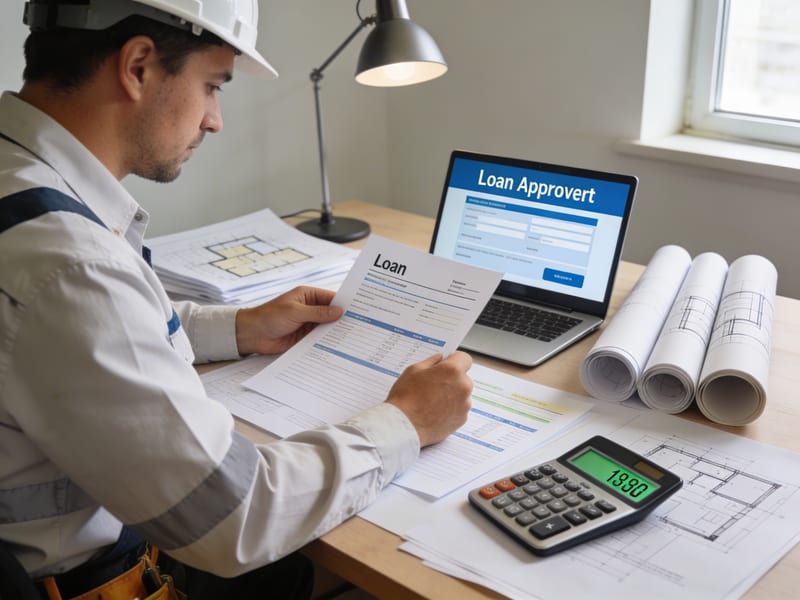
- 3Prepare your application: 2 years of tax returns (personal and business), 6 months of bank statements, a simple profit and loss statement, and your CSLB license.
- 4Compare APR, not monthly payments. Online lenders (OnDeck, Fundbox) are fast but expensive (25-50% APR). Banks and credit unions are slower but cheaper (8-15% APR).
- 5If you have been in business less than 2 years, you may need a co-signer or collateral (equipment, vehicle, or home equity). Start building credit history NOW for future needs.
- 6Only borrow what you can repay from existing revenue. The #1 cause of contractor business failure is overleveraging — taking on debt for jobs that have not been signed yet.
 30
Equipment Financing (Large Assets)
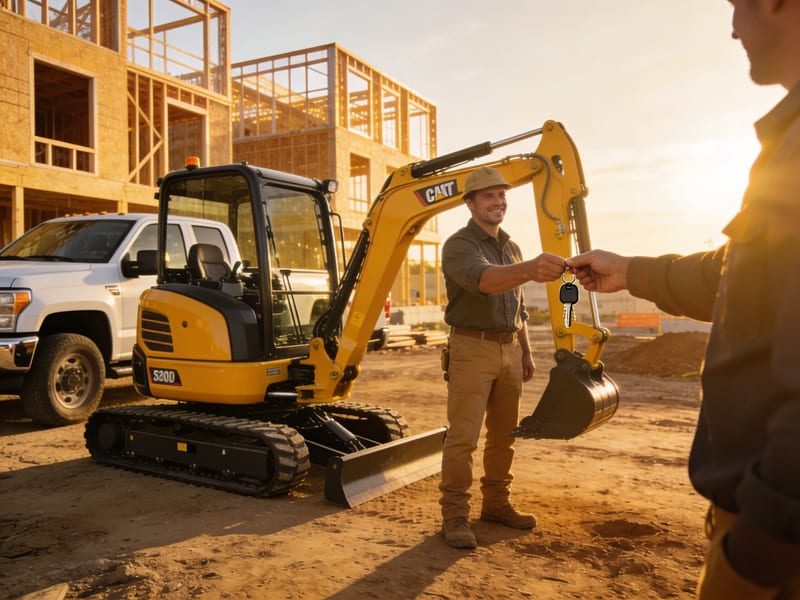
Financing for trucks, trailers, skid steers. A $75K excavator at 2-5% yields $1,500-$3,750 commission per deal.
Do It Yourself
- 1For equipment under $25K (trucks, trailers, compact equipment): apply at your bank or credit union first. Their rates are typically 5-15% lower than equipment finance companies.
- 2For larger equipment ($25K-$500K): contact Beacon Funding, Balboa Capital, or National Funding for quotes. Also check manufacturer financing (CAT Financial, John Deere Financial).
- 3Get pre-approved before shopping for equipment. This gives you negotiating power — you are a cash buyer in the seller's eyes.
- 4Compare lease vs buy: leasing keeps payments lower and may be fully deductible, but buying builds equity. If you will use the equipment for 5+ years, buying usually wins.
- 5Check Section 179 deduction limits for the current tax year — you may be able to deduct the full purchase price in the year you buy, rather than depreciating over several years.
- 6Consider buying used equipment at auction: IronPlanet.com, Ritchie Bros (rbauction.com), and GovPlanet for government surplus. Savings of 30-60% vs new.
 31
Invoice Factoring
Sell invoices for immediate cash. Crucial for contractors with slow-paying GCs. FundThrough and Triumph Business Capital.
Do It Yourself
- 1Before factoring invoices, try these free alternatives first: ask clients for faster payment terms (Net 15 instead of Net 30), offer a 2% discount for payment within 10 days.
- 2Invoice immediately upon completion (not at end of month). The clock on payment terms starts when you send the invoice — delays cost you real money.
- 3For progress billing (common on larger jobs), invoice at pre-agreed milestones: mobilization, rough-in, final. Get these milestones written into the contract.
- 4If you still need factoring: compare FundThrough, BlueVine, and Triumph Business Capital. Typical fees are 1-4% of invoice value per 30 days.
- 5Understand the true cost: factoring a $10,000 invoice at 3% means you receive $9,700. If the client pays in 30 days, that 3% fee equals 36% APR. Use factoring sparingly.
- 6The long-term fix for cash flow is better contracts: require deposits (10-30% upfront), progress payments tied to milestones, and shorter payment terms.
 32
Surety Bond Financing
Premium financing for license/contract bonds when contractors can't afford lump-sum premiums. Helps credit-challenged new licensees.
Do It Yourself
- 1Contact a surety bond broker (not an insurance agent — bonds are different from insurance). Search 'California contractor surety bond' and compare 3 brokers.
- 2For your CSLB contractor license bond ($25K required): premiums range from $100-$500/year depending on credit score. Apply directly at suretybonds.com or JW Surety.
- 3If your credit score is below 600, expect to pay 5-10% of the bond amount as premium (so $1,250-$2,500 for a $25K bond). Improving credit to 700+ drops it to 1-3%.
- 4For project-specific performance bonds (often required on public works): the surety evaluates your financials, not just credit. You need a strong balance sheet and project history.
- 5Build a relationship with one surety company over time. As you complete bonded projects successfully, your bonding capacity increases. This is critical for government work.
- 6If you cannot get bonded due to credit issues, some bonding companies offer 'high-risk' programs with higher premiums. SuretyBonds.com and BondExchange have programs for new contractors.
Marketing & Lead Generation
Resources 33-38
Lead platforms, local SEO, marketing agencies, review management, social media, and print materials
 33
Lead Generation Platforms
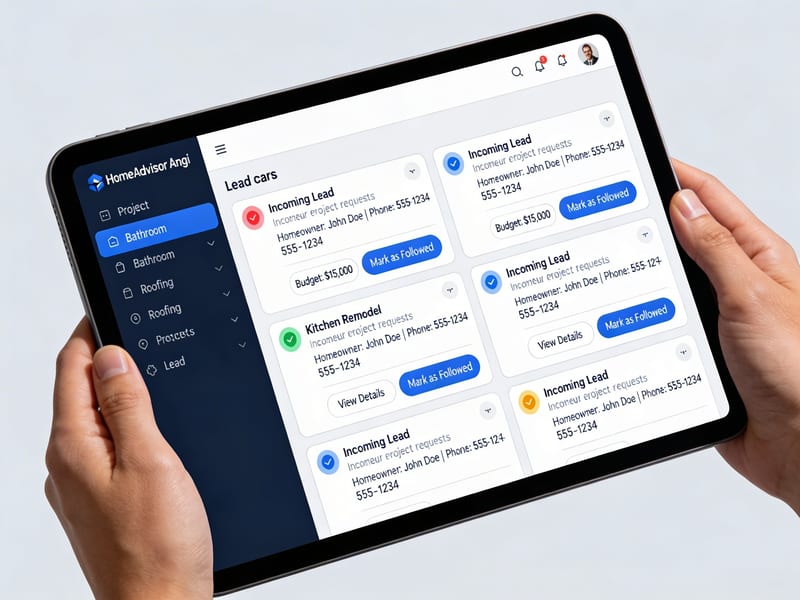
Thumbtack, Angi, Yelp for Business, Bark, Houzz. Primary lead source for first-year contractors.
Do It Yourself
- 1Create profiles on the top 3 free platforms: Google Business Profile (mandatory), Yelp for Business (free listing), and Nextdoor (neighborhood referrals).
- 2Ask every satisfied customer for a Google review. Send them a direct link (search 'Google review link generator'). 10+ five-star reviews puts you above 90% of competitors.
- 3For paid leads, start with Thumbtack ($15-$60/lead depending on trade). Set your weekly budget at $100-$200 and track your close rate to calculate cost per acquired customer.
- 4Post your completed projects on Instagram and Facebook with before/after photos. Use local hashtags (#LosAngelesContractor, #BayAreaRemodel). This is free marketing.
- 5Join local Facebook groups for homeowners ('Sacramento Home Improvement,' 'LA Homeowner Tips') and answer questions helpfully — do not spam. People hire helpful experts.
- 6Put your business info on every job site: yard signs ($3-$10 each from VistaPrint), truck lettering, and branded shirts. Your best leads come from neighbors seeing your work.
 34
GBP & Local SEO Tools
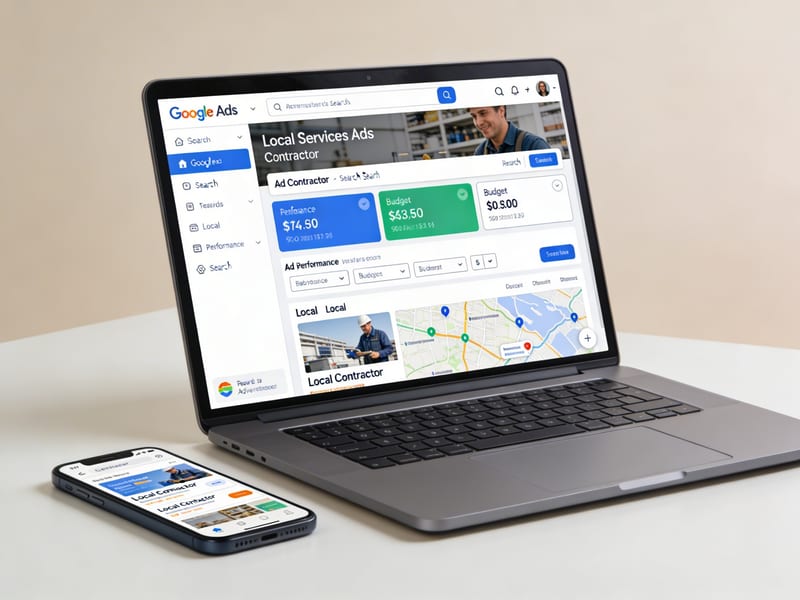
BrightLocal, Whitespark, Moz Local for Google Business Profile optimization. One of the most important non-paid channels.
Do It Yourself
- 1Claim and fully complete your Google Business Profile at business.google.com. Fill out EVERY field: hours, services, service area, description, and add 20+ high-quality photos.
- 2Choose your primary category carefully (e.g., 'General Contractor,' 'Electrician,' 'Plumber'). Add secondary categories for all services you offer.
- 3Post weekly updates on your Google Business Profile: project photos, seasonal tips, promotions. Google rewards active profiles with higher local search rankings.
- 4Get your business listed on Apple Maps (mapsconnect.apple.com), Bing Places (bingplaces.com), and Yelp. Consistent NAP (Name, Address, Phone) across all directories boosts SEO.
- 5Respond to EVERY Google review within 24 hours — both positive and negative. Thank positive reviewers by name. For negative reviews, be professional and offer to resolve offline.
- 6Ask Google to verify your business via postcard, phone, or video. Unverified profiles do not appear in the Local Pack (the map section that gets 44% of clicks).
 35
Contractor Marketing Agencies
Scorpion, Blue Corona, and other agencies focused on home services and contractor marketing.
Do It Yourself
- 1Before hiring an agency, do the basics yourself first: Google Business Profile, 20+ Google reviews, and a simple website. This gives any future agency a foundation to build on.
- 2Build a simple website for free using Google Sites or Carrd.co ($19/year). Include: services, service area, license number, phone number, and a photo gallery.
- 3For a professional website: use Squarespace ($16/month) or Wix ($16/month). Pick a contractor template, add your content, and connect your domain. Takes a weekend.
- 4Run Google Ads yourself with a $300-$500/month budget. Target your service area + service keywords ('plumber near me,' 'electrician Sacramento'). Google offers free $500 ad credits for new accounts.
- 5Track where every lead comes from. Ask every caller 'How did you find us?' Keep a tally. After 3 months, double down on what works and cut what does not.
- 6If you decide to hire an agency, ask for references from other contractors in your trade. Expect $1,000-$3,000/month minimum. Any agency promising 'guaranteed leads' is lying.
 36
Review Management Platforms
Birdeye, Podium, NiceJob for automated reviews, SMS requests, and reputation tracking. Critical for local SEO and social proof.
Do It Yourself
- 1Send a review request text/email within 2 hours of completing a job. Strike while the iron is hot — review rates drop 80% after 48 hours.
- 2Create a simple review request template: 'Hi [Name], thanks for choosing [Business]. If you were happy with the work, a Google review helps other homeowners find us: [link]'
- 3Respond to every review on Google, Yelp, and Facebook within 24 hours. Personalize each response — mention the specific project or their name.
- 4For negative reviews: do NOT argue publicly. Respond professionally: 'We're sorry about your experience. Please call us at [number] so we can make it right.' Then actually make it right.
- 5Monitor your reviews weekly. Set up Google Alerts for your business name and check Yelp/Facebook. Catching a bad review early lets you respond before potential clients see it.
- 6Display your best reviews on your website, proposals, and social media. Screenshot and share reviews as Instagram stories. Social proof is the most powerful marketing tool.
 37
Social Media Management Tools
Hootsuite, Buffer, Sprout Social for scheduling and managing posts. Some trades win big on Instagram and TikTok.
Do It Yourself
- 1Start with one platform only. For contractors, Instagram works best (visual before/after content). Set up a business account linked to your Facebook page.
- 2Post 3-5 times per week: before/after photos, time-lapse videos of work in progress, crew photos, and completed project walkthroughs. Use your phone — professional video is not needed.
- 3Use relevant local hashtags on every post: #[YourCity]Contractor, #CaliforniaContractor, #[YourTrade], #BeforeAndAfter, #HomeRenovation. Mix 10-15 hashtags per post.
- 4Share content to your Google Business Profile weekly (yes, GBP has a posting feature and most contractors ignore it). These posts show up in Google search results.
- 5Batch your content creation: take photos on every job site, spend 30 minutes on Sunday scheduling the week's posts using the free Buffer plan or Meta Business Suite.
- 6Do NOT buy followers or engagement. 500 real local followers who hire you are worth more than 10,000 fake followers. Focus on your service area.
 38
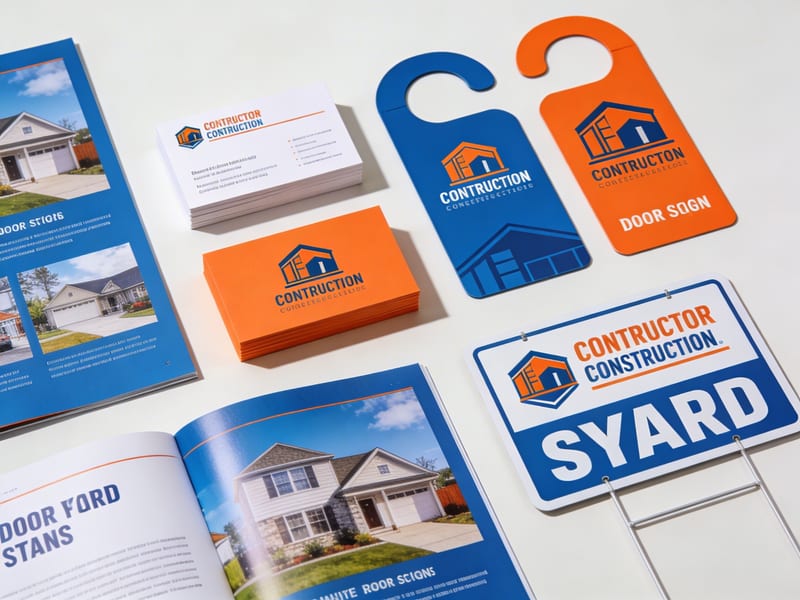
Business Cards, Yard Signs & Door Hangers
Vistaprint, GotPrint, 4Over for printed marketing materials. Yard signs and door hangers drive local leads.
Do It Yourself
- 1Design business cards and leave-behinds using Canva.com (free). Use a clean, professional template. Include: name, title, license number, phone, email, website.
- 2Order 500 business cards from VistaPrint ($20-$40) or GotPrint ($15-$30). Get the thicker cardstock — flimsy cards get thrown away.
- 3For yard signs: order 10-20 coroplast signs (18x24 inches) from BuildASign.com or VistaPrint. Budget $5-$10 per sign. Place one at every active job site with homeowner permission.
- 4Create door hangers for the 20 nearest neighbors at every job site. 'We're working on your neighbor's [project type]. Free estimates: [phone].' Order from VistaPrint or GotPrint.
- 5Leave a professional folder with every completed job: your card, a magnet, a referral card ('Refer a friend, get $100 off'), and a thank-you note. Total cost per folder: $2-$3.
- 6Track which materials generate calls. Put different phone numbers or promo codes on different materials. After 3 months, reorder only what actually works.
Professional Services
Resources 39-42
Bookkeeping, tax prep, construction law, and HR outsourcing for growing contractors
 39
Bookkeeping Services
Done-for-you bookkeeping from Bench, Pilot, Botkeeper, 1-800Accountant. Essential for taxes, loans, and understanding job profitability.
Do It Yourself
- 1Start with Wave Accounting (free) or QuickBooks Simple Start ($15/month). Connect your bank account and credit card. Categorize transactions weekly — 30 minutes max.
- 2Set up a simple filing system: one folder per month, one subfolder per job for invoices and receipts. Digital is fine — Google Drive, Dropbox, or the accounting app's receipt scanner.
- 3Learn the 5 categories that matter most for contractor bookkeeping: materials, labor (including subs), equipment/tools, vehicle expenses, and overhead (insurance, rent, phone, software).
- 4Reconcile your bank account monthly — match every transaction in your software to your bank statement. This catches errors, fraud, and forgotten expenses.
- 5Run a Profit & Loss report at the end of every month. If you cannot tell which jobs are profitable and which are losing money, add more detail to your job costing.
- 6Set aside time every Friday for 'finance Friday' — 30 minutes to categorize transactions, send invoices for completed work, and follow up on unpaid invoices. Consistency beats perfection.
 40
Tax Preparation for Contractors
TurboTax, H&R Block for DIY, plus construction-savvy CPA referral networks. Mandatory, tax complexity increases with new business.
Do It Yourself
- 1For year one, use TurboTax Self-Employed ($120-$180) or FreeTaxUSA ($0 federal, $15 state). Both handle Schedule C (self-employment income) and common contractor deductions.
- 2Track these deductions throughout the year: vehicle mileage (67¢/mile in 2024), tools and equipment, materials, insurance premiums, license fees, phone, home office, and continuing education.
- 3Make quarterly estimated tax payments (due Jan 15, Apr 15, Jun 15, Sep 15). Underpayment penalties add up. Use IRS Form 1040-ES or pay online at IRS.gov/payments.
- 4If your business net income exceeds $50K/year, consult a CPA about S-Corp election. It can save $3,000-$8,000/year in self-employment taxes. Worth the $500-$1,500 CPA fee.
- 5Keep ALL receipts for 7 years. The IRS has 3 years to audit most returns, but 6 years if they suspect underreporting of 25%+. Digital copies are fine.
- 6To find a contractor-savvy CPA: ask other contractors in your trade for referrals, or search the AICPA directory at aicpa.org. Construction CPAs understand job costing and retainage.
 41
Construction Law Attorneys
Lawyers handling contract drafting, lien disputes, CSLB defense, and collections. Sell sponsored listings and webinar slots.
Do It Yourself
- 1For basic contracts and legal docs, use the free templates from CSLB (cslb.ca.gov) and the California Contractors License Law & Reference Book (free PDF online).
- 2For contract disputes under $10,000: use CA Small Claims Court ($30-$75 filing fee, no lawyer needed). You represent yourself. The limit is $10,000 for individuals, $5,000 for businesses.
- 3For disputes over $10K or complex legal issues: get a free consultation from 2-3 construction attorneys before hiring one. Most offer 30-minute free consults.
- 4To find a construction attorney: search the California State Bar lawyer directory (calbar.ca.gov) and filter by 'Construction Law.' Check reviews on Avvo.com.
- 5Learn the basics of CA construction law yourself: read the CSLB's 'California Contractors License Law & Reference Book' (free). It covers licensing, contracts, liens, and disputes.
- 6Join a local builders exchange or contractor association — many offer free or low-cost legal hotlines and contract review for members.
 42
HR & Employment Services (PEO)
Justworks, TriNet, ADP TotalSource for HR outsourcing. Relevant once contractors have several employees.
Do It Yourself
- 1For 1-5 employees, handle HR basics yourself: create an employee handbook (templates available at SHRM.org and CalChamber.com), set up payroll, and maintain personnel files.
- 2Buy the CalChamber Required Notices Kit ($25-$50/year) — it includes all mandatory CA workplace posters and notices. Federal and state law requires these posted at your workplace.
- 3Use Gusto or ADP Run for payroll + basic HR. Both include new hire reporting, tax filings, and employee onboarding — everything required for small teams.
- 4Understand CA-specific labor laws that trip up contractors: meal and rest break requirements, overtime rules (daily OT after 8 hours in CA), and prevailing wage on public works.
- 5Create a new hire checklist: I-9 verification, W-4, DE-4 (CA withholding), direct deposit form, handbook acknowledgment, and safety orientation sign-off.
- 6When you reach 5+ employees and HR becomes a time drain, get quotes from Justworks or TriNet PEO. At that point, the cost ($50-$150/employee/month) is worth the time savings.
Physical Space & Logistics
Resources 43-45
Virtual offices, storage units, and warehouse space for growing operations
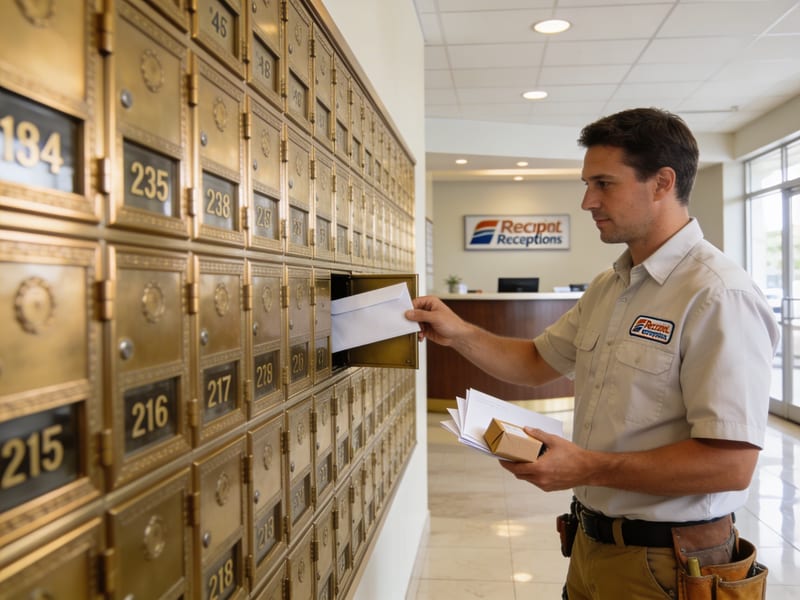 43
Commercial Mailbox & Virtual Office
iPostal1, Regus, WeWork for professional addresses. Many contractors don't want their home address on CSLB and Google.
Do It Yourself
- 1If you just need a professional mailing address, rent a PO Box at your local USPS ($30-$80/6 months) — but note that PO Boxes cannot be used as a street address for CSLB or Google Business.
- 2For a real street address: rent a mailbox at a UPS Store ($20-$50/month). You get a real street address (not a PO Box) that works for CSLB registration and Google Business Profile.
- 3Alternatively, use a coworking space with a mailing address (WeWork, Regus, or local options). Many include meeting room hours for $50-$150/month.
- 4For your CSLB license address: you can use your home address, a rented mailbox (UPS Store), or a commercial address. The address IS public record on CSLB.ca.gov.
- 5If clients need to visit your 'office,' rent a meeting room by the hour through Breather, WeWork On Demand, or a local coworking space ($25-$75/hour).
- 6Register your business address consistently everywhere: CSLB, Google Business Profile, Yelp, bank accounts, and insurance. Inconsistent addresses hurt your local SEO.
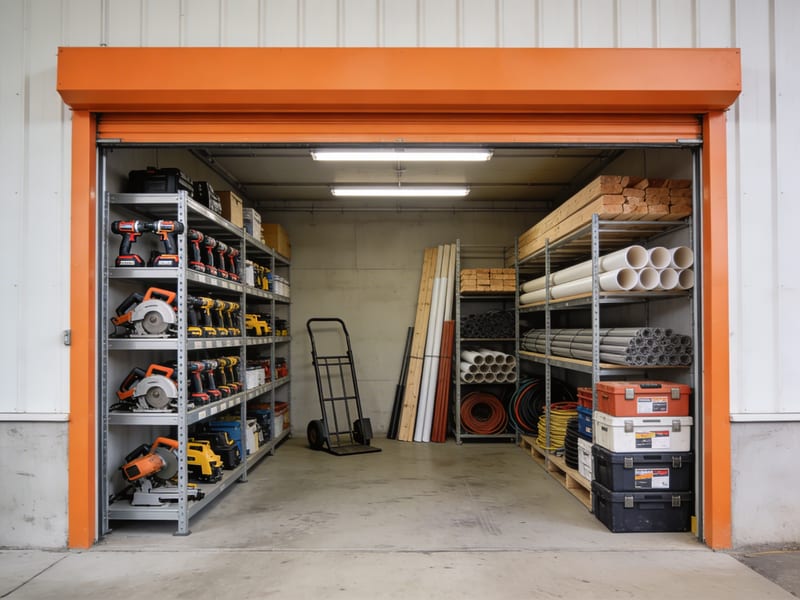 44
Storage Units for Materials & Tools
Self-storage at Public Storage, Extra Space, CubeSmart for material overflows and tool storage when you don't have a warehouse.
Do It Yourself
- 1Search Google Maps for 'storage units near me' and compare 3-5 facilities. Check reviews for security complaints (break-ins, water damage).
- 2For materials and tools, you need a drive-up accessible unit (not an upper floor). 10x20 ($150-$350/month in CA) fits most solo contractor needs. 10x30 for larger operations.
- 3Visit in person before renting: check for water stains on walls/ceiling, verify the lighting works, test the lock, and ask about their security cameras and access hours.
- 4Ask about month-to-month vs annual leases. Month-to-month gives flexibility; annual leases are often 10-20% cheaper. Start month-to-month, switch to annual if you are staying.
- 5Get storage insurance — either through the facility ($10-$20/month) or add a rider to your business insurance policy. Standard policies do NOT cover offsite storage.
- 6Organize your unit with shelving: buy industrial shelving from Costco Business Center or Uline ($60-$150 per unit). Keep frequently needed items near the door.
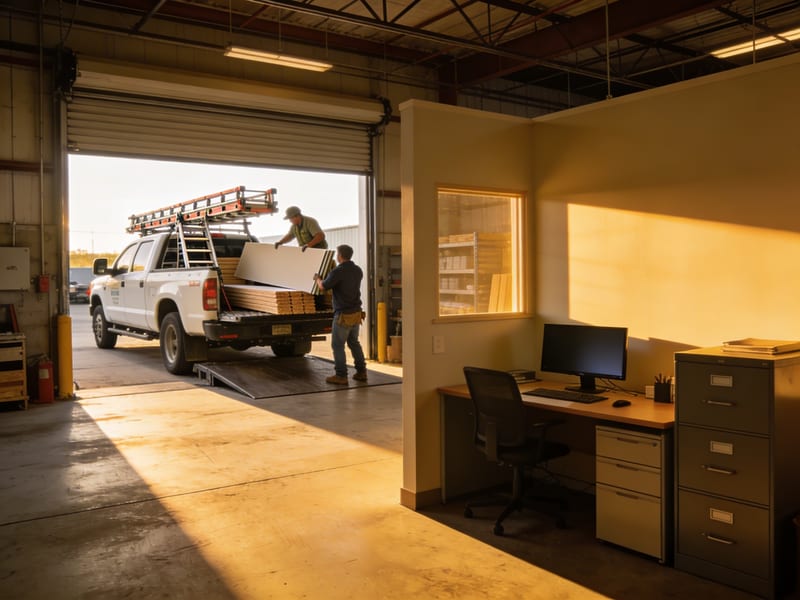 45
Office / Warehouse Space
Light industrial and flex space found via LoopNet, Crexi, and local brokers. Common once contractors have crews and inventory.
Do It Yourself
- 1Define what you need: just storage (warehouse), office + storage (flex space), or full shop (light industrial). This determines which commercial real estate category to search.
- 2Search LoopNet.com, Crexi.com, and Craigslist 'commercial real estate' for your area. Filter by 'industrial' or 'flex' — not 'retail' or 'office.'
- 3Drive through industrial areas near your service territory. Many small warehouse spaces are rented with just a 'For Lease' sign — they are not listed online.
- 4Budget for total occupancy cost: rent + NNN charges (property tax, insurance, maintenance — typically 20-40% on top of base rent in CA). Ask for the full NNN breakdown.
- 5Negotiate the lease: ask for 2-3 months free rent on a multi-year lease, tenant improvement allowance for buildout, and the right to sublease unused space.
- 6Before signing: verify the zoning allows contractor use (some areas restrict outdoor storage, vehicle parking, or noise). Check with the city planning department.
Education & Credentials
Resources 46-50
OSHA cards, EPA certification, First Aid, lead-safe renovation, and forklift operator certs
 46
OSHA 10-Hour & 30-Hour Cards
Online and in-person OSHA 10/30 training. Often required by GCs and public works projects. $15-60 per course sale.
Do It Yourself
- 1OSHA 10-Hour is sufficient for most contractors. 30-Hour is required for site supervisors on some public works projects. Check your contract requirements.
- 2Take the course online through an OSHA-authorized provider: 360Training.com ($25-$60), ClickSafety.com ($60-$90), or CareerSafe ($25). All deliver the same DOL card.
- 3The 10-Hour course takes 2 days (cannot be completed in less than 10 hours — it is timed). The 30-Hour takes about a week at 4-6 hours/day.
- 4Choose the correct industry: 'Construction' (not 'General Industry'). Construction covers fall protection, scaffolding, excavation, and other job-site-specific hazards.
- 5After completing the course, you receive a DOL OSHA completion card by mail (2-3 weeks). Keep a photo of the card on your phone for job site access.
- 6OSHA cards do not expire nationally, but some states and employers require refresher training every 3-5 years. Check your GC's requirements.
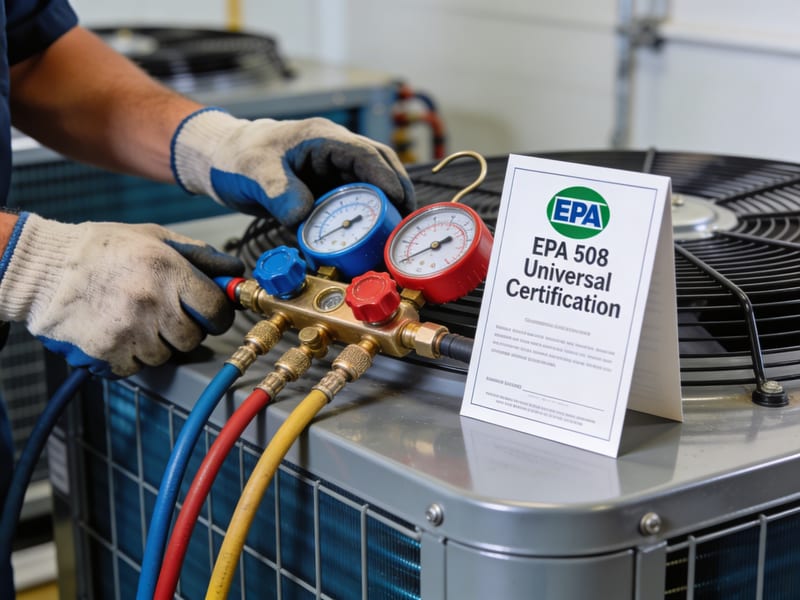 47
EPA 608 Certification (HVAC)
EPA Section 608 HVAC refrigerant handling certification. Mandatory for HVAC techs handling refrigerant.
Do It Yourself
- 1EPA 608 is ONLY required if you handle refrigerants (HVAC technicians, refrigeration contractors). If your trade does not involve refrigerants, skip this certification.
- 2Choose your certification type: Type I (small appliances), Type II (high-pressure), Type III (low-pressure), or Universal (all types — recommended for HVAC techs).
- 3Study with free resources: EPA608.com practice tests, YouTube study guides (search 'EPA 608 Universal study guide'), and the ESCO Group study materials.
- 4Take the exam through an EPA-approved testing organization. ESCO Institute (ESCOGroup.org) offers online proctored exams ($30-$60) and in-person testing at trade schools.
- 5The exam is open-book (25 questions per section, 70% to pass). With 2-3 days of studying, most technicians pass on the first attempt.
- 6Your EPA 608 certification never expires. Keep your certificate in a safe place and carry a copy. Employers and inspectors can ask to see it at any time.
 48
First Aid / CPR Certification
Online and blended First Aid/CPR from Red Cross and National CPR Foundation. Common requirement on larger job sites.
Do It Yourself
- 1For a quick and affordable option: take an online course through National CPR Foundation ($15-$25). It includes First Aid, CPR, AED, and BBP. You get a digital card immediately.
- 2For hands-on training (required by some employers): find a local Red Cross class at redcross.org/take-a-class ($80-$100). Also check your local community college continuing education.
- 3The blended option (online coursework + in-person skills check) gives you the best of both: learn at your own pace, then do a 30-minute hands-on evaluation.
- 4Most First Aid/CPR certifications are valid for 2 years. Set a calendar reminder 30 days before expiration to recertify.
- 5Keep your certification card in your wallet and a photo on your phone. Some job sites require proof of current First Aid/CPR for entry.
- 6Consider getting your crew certified as a group — many training providers offer on-site group classes at a discount ($25-$50/person for 6+ students).
 49
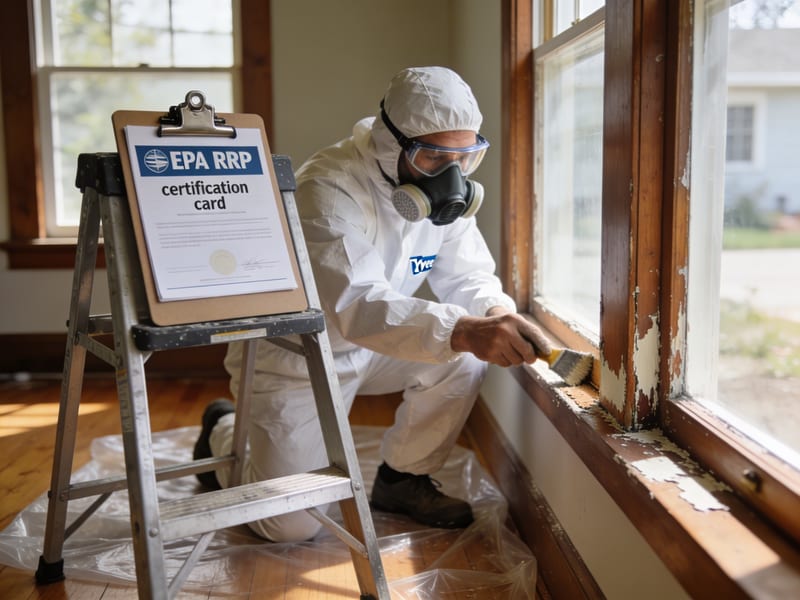
Lead-Safe Renovation (EPA RRP)
EPA Renovation, Repair and Painting certified renovator training. Mandatory for disturbing lead paint in pre-1978 housing.
Do It Yourself
- 1EPA RRP certification is REQUIRED if your work disturbs painted surfaces in homes, childcare facilities, or schools built before 1978. This is federal law.
- 2Take an EPA-accredited initial training course (8 hours in person). Search 'EPA RRP training California' for providers. Cost: $200-$350 per person.
- 3The course covers lead-safe work practices: containment, HEPA vacuuming, wet methods, prohibited practices, and cleaning verification using dust wipes.
- 4After completing training, you (the individual) are a Certified Renovator. Your FIRM also needs to register with EPA: apply at epa.gov/lead/renovation-repair-and-painting-program ($300 firm fee).
- 5Certification lasts 5 years (individual) and 5 years (firm). Set calendar reminders. Lapsed certification means you legally cannot disturb lead paint.
- 6Keep your certified renovator card with you on every pre-1978 job. Document all lead-safe practices with photos and the post-renovation cleaning verification records.
 50
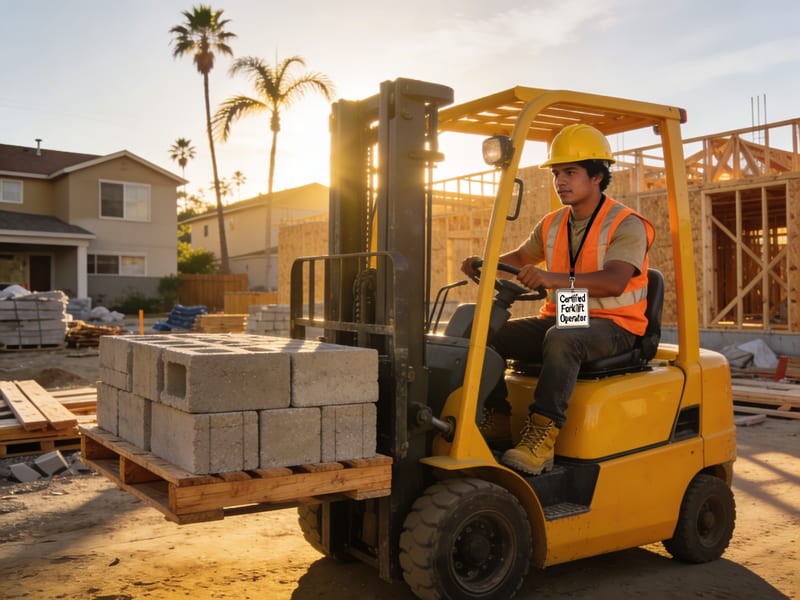
Forklift & Equipment Operator Certs
Online and on-site operator certifications for forklifts, aerial lifts, and more. Required on many commercial sites.
Do It Yourself
- 1OSHA requires operator certification for ALL powered industrial trucks (forklifts, reach trucks, order pickers) under 29 CFR 1910.178.
- 2Take an online training course ($25-$60) through CertifyMe.net, ForkliftCertification.com, or OSHA.com. The online portion covers theory, safety rules, and regulations.
- 3After online training, you MUST complete a hands-on practical evaluation with a qualified trainer operating actual equipment. Many rental companies offer this when you rent a forklift.
- 4For aerial lift (boom lift, scissor lift) certification: take the IPAF or manufacturer training. United Rentals and Sunbelt offer operator training when you rent equipment.
- 5Forklift certification is valid for 3 years under OSHA rules. Aerial lift certification renewal varies by employer policy. Track expiration dates for all operators.
- 6Keep training records on file: date of training, type of equipment, trainer name, and written evaluation results. OSHA can request these during an inspection.
Spanish-Language Resources
Resources 51-53
Bilingual legal services, financial tools, and remittance for your Spanish-speaking contractors
 51
Spanish-Language Legal Services
Bilingual LLC/Corp formation, contract translation, and Spanish-language legal clinics. Highly valuable for 45% of students.
Do It Yourself
- 1Search 'abogados de negocios en español' + your city on Google Maps. Filter for 4+ star reviews and look for reviews specifically mentioning bilingual service.
- 2Check the California State Bar directory (calbar.ca.gov) — you can filter by practice area and language. Choose 'Business/Corporate' and 'Spanish' as the language.
- 3Many CA legal aid organizations offer free or low-cost business formation help in Spanish: search 'legal aid business formation Spanish [your county].'
- 4For contract translation: avoid Google Translate for legal documents. Use a certified legal translator ($0.10-$0.25 per word) or a bilingual attorney who practices in your area.
- 5CSLB exam prep and application materials are available in Spanish at cslb.ca.gov. The CSLB also has a Spanish-language phone line for licensing questions.
- 6Join the local Hispanic Contractors Association chapter (search 'Hispanic Contractors [your city]'). Members share bilingual attorney and accountant referrals.
 52
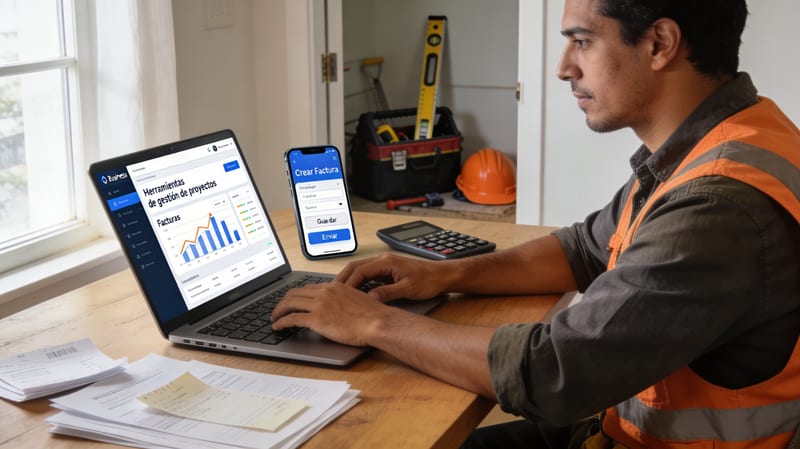
Spanish-Language Business Tools
SaaS and financial tools for Spanish-speaking SMB owners. Camino Financial and other Latino-focused lenders and bookkeeping apps.
Do It Yourself
- 1For accounting in Spanish: QuickBooks and Wave both offer Spanish-language interfaces. Switch the language in your account settings.
- 2For invoicing: FreshBooks and Zoho Invoice support Spanish invoices — useful if you invoice Spanish-speaking clients or subcontractors.
- 3For business banking in Spanish: Camino Financial (caminofinancial.com) specializes in Latino small business lending. Bilingual support and applications.
- 4For a business phone: Google Voice works in any language. OpenPhone and Grasshopper also support bilingual voicemail greetings and auto-attendant menus.
- 5Use Canva.com in Spanish (it auto-detects language) for creating marketing materials, business cards, and social media posts in Spanish.
- 6Search 'herramientas para contratistas' or 'software para construccion en español' to find tools with full Spanish support. Many US SaaS products now offer complete Spanish interfaces.
 53
Remittance & International Banking
Wise, Remitly, Western Union Business for money transfers. Many Hispanic contractors send money home or pay relatives abroad.
Do It Yourself
- 1Compare transfer fees and exchange rates across 3 providers: Wise.com (typically lowest fees at 0.5-1.5%), Remitly.com (competitive for Mexico/Central America), and your bank's wire service.
- 2For regular transfers to Mexico: set up a Wise or Remitly account and save your recipient's bank details. Recurring transfers can be automated on a schedule.
- 3Check the exchange rate BEFORE sending. The 'real' mid-market rate is shown on Google (search 'USD to MXN'). Any provider charging more than 1% above mid-market is overcharging.
- 4For large transfers ($5,000+): your business bank may offer better rates on wire transfers than consumer apps. Ask your bank about their commercial wire transfer fees.
- 5Keep records of all international transfers for tax purposes. The IRS requires reporting of foreign bank accounts (FBAR) if the combined balance exceeds $10,000 at any point in the year.
- 6Set up transfer alerts and confirmations so both you and the recipient are notified when money is sent and received.
Non-Obvious & Creative
Resources 54-60
Group purchasing, uniforms, associations, warranties, dumpsters, porta-potties, and background checks
 54
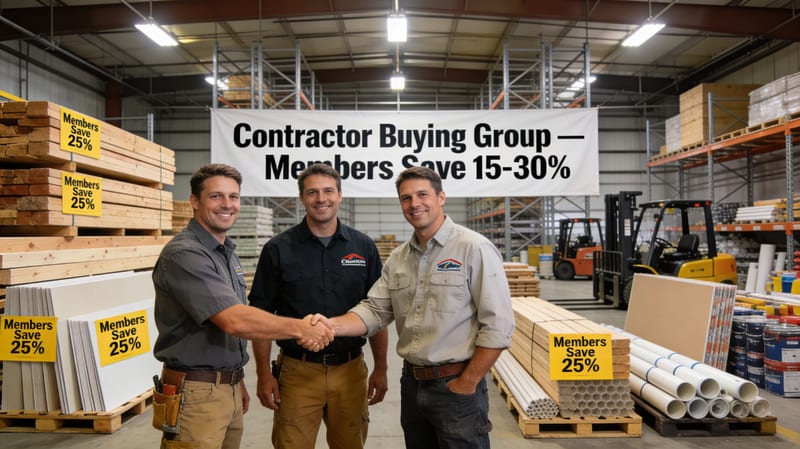
Group Purchasing / Buying Co-op
Aggregated purchasing power for tools, materials, and services. Saves contractors 5-20% on large categories at scale.
Do It Yourself
- 1Join your local builders exchange or AGC (Associated General Contractors) chapter. Membership often includes access to group purchasing programs with 5-20% discounts.
- 2Coordinate with other local contractors in your trade to buy materials in bulk. 3-4 contractors ordering lumber or drywall together gets you contractor pricing at the distributor level.
- 3Negotiate directly with suppliers: once you spend $2K+/month consistently with one supplier, ask for a volume discount. Most will offer 5-10% off for loyal accounts.
- 4Check Costco Business Center for bulk supplies: paper towels, trash bags, cleaning supplies, snacks, and basic PPE. Prices are 30-50% below retail.
- 5For tool purchases, wait for buying events at trade shows and home shows. Manufacturers offer show-only deals that are 15-30% below retail.
- 6Sign up for pro rewards programs at Home Depot (Pro Xtra), Lowe's (MVP Pro), and hardware chains. Points add up to significant credits over a year of regular purchases.
 55
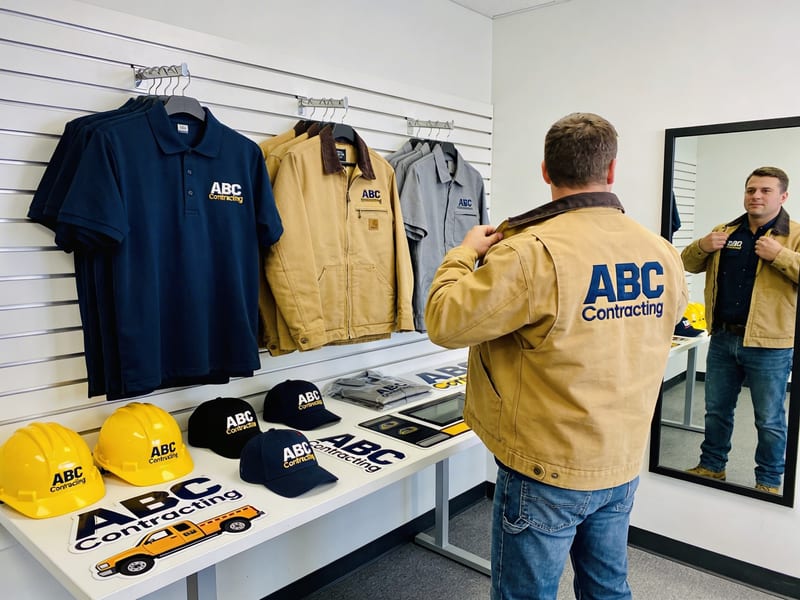
Branded Merchandise & Uniforms
Custom Ink, Cintas, UniFirst for workwear, branded apparel, and swag. Professionalism and job-site safety.
Do It Yourself
- 1Start with matching branded t-shirts from CustomInk.com ($8-$15 each for 12+ shirts). Get your logo, company name, and phone number on the back. Colors: pick one and stick with it.
- 2For hi-vis and safety wear: order blank hi-vis shirts from SafetySmartGear.com and have a local embroidery shop add your logo. Cheaper than ordering pre-branded from uniform companies.
- 3Measure your team for consistent sizing. Order 3-4 shirts per person per season (they get destroyed on job sites). Budget $30-$50 per employee per quarter.
- 4Add your logo to hard hats using vinyl stickers — order from StickerMule.com ($1-$3 per sticker). This is the cheapest way to brand your crew on every job site.
- 5For a professional look: get matching hats/beanies with embroidered logo ($8-$12 each). Crew members actually WANT to wear branded hats, so your brand gets free exposure.
- 6Keep spare clean shirts in your truck for client meetings and inspections. Showing up in a branded, clean shirt makes a stronger impression than you think.
 56
Contractor Associations & Memberships
AGC, NAHB, local builders' exchanges, Hispanic Contractors Associations. Networking, lobbying, and continuing education.
Do It Yourself
- 1Search for your local AGC (Associated General Contractors) chapter at agc.org. Membership gives you networking, training, plan rooms, and group purchasing discounts.
- 2Check for trade-specific associations: NECA (electrical), PHCC (plumbing/HVAC), NAHB (homebuilders), ASA (subcontractors). Each has a California chapter.
- 3Join your local builders exchange for access to plan rooms (see upcoming bid opportunities), networking events, and contractor training classes.
- 4For Hispanic contractors: search 'Hispanic Contractors Association California' — chapters exist in LA, Sacramento, SF, and other major cities. Bilingual networking and resources.
- 5Attend 3-4 association events before committing to paid membership. Most organizations offer guest passes or free first meetings so you can evaluate the value.
- 6The real value of associations is REFERRALS, not education. Make a goal to meet 5 new people per event. Exchange cards and follow up within 48 hours.
 57
Extended Warranty & Tool Protection
Allstate Protection Plans, Upsie, SquareTrade for tools and equipment. Especially useful for expensive cordless tools.
Do It Yourself
- 1Most major tool brands already include warranties: Milwaukee (5-year), DeWalt (3-year), Makita (3-year). Register your tools at the manufacturer's website to activate warranty coverage.
- 2For battery-powered tools, batteries are usually covered for 2-3 years. Batteries are the most expensive replacement — keep your receipt and warranty registration.
- 3Consider a credit card with extended warranty benefits: Chase Ink and Amex Business cards automatically add 1-2 years of extended warranty on purchases.
- 4For high-value equipment ($1,000+): extended warranties from Allstate Protection Plans or Upsie ($30-$150) can be worth it. Compare the warranty cost vs replacement cost.
- 5Photograph every tool purchase receipt and store digitally (Google Drive folder called 'Tool Warranties'). Many warranties require proof of purchase for claims.
- 6For theft protection: add a tools floater to your business insurance policy ($100-$300/year). This covers tools stolen from your truck, van, or job site — standard policies often exclude this.
 58
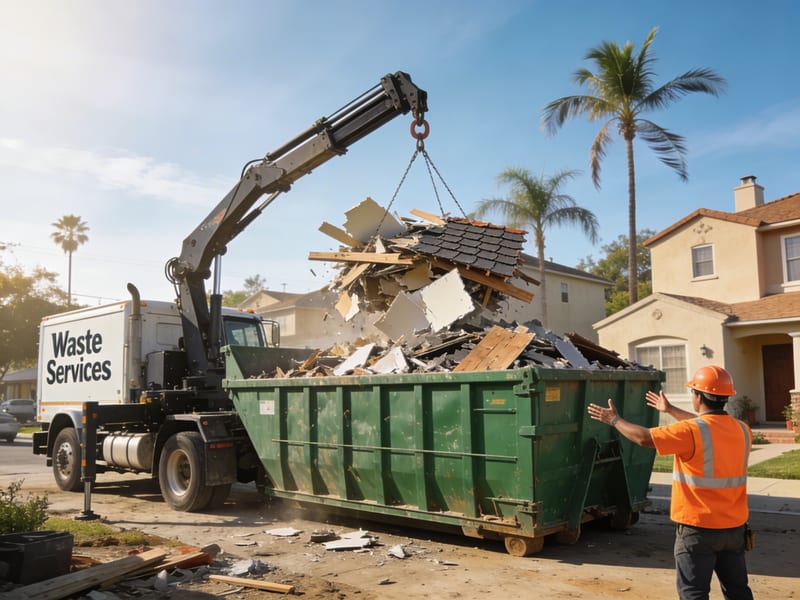
Commercial Dumpster & Waste Hauling
Roll-off dumpsters and construction debris hauling from Waste Management, Republic Services, and local haulers.
Do It Yourself
- 1Search 'roll off dumpster rental [your city]' and get quotes from 3 companies: Waste Management, Republic Services, and one local hauler. Local haulers are often 20-30% cheaper.
- 2Choose the right dumpster size: 10-yard (small remodels, cleanouts), 20-yard (kitchen/bath remodel), 30-yard (large remodel/demo), 40-yard (new construction/major demo).
- 3Ask about weight limits — most dumpsters have a 2-4 ton included weight. Overage fees are $50-$100 per ton. Concrete and dirt are heavy — consider a separate load for heavy materials.
- 4Schedule delivery 1-2 days before you need it. Confirm the delivery location (driveway, street — check if you need a city encroachment permit for street placement).
- 5Separate recyclable materials (metal, cardboard, clean wood) from trash. Many haulers charge less for sorted loads, and some recyclables can be sold or given away free on Craigslist.
- 6Build dumpster costs into your bid: $350-$800 per dumpster pull depending on size and area. Most residential remodels need 1-3 dumpster loads. Do not eat this cost.
 59
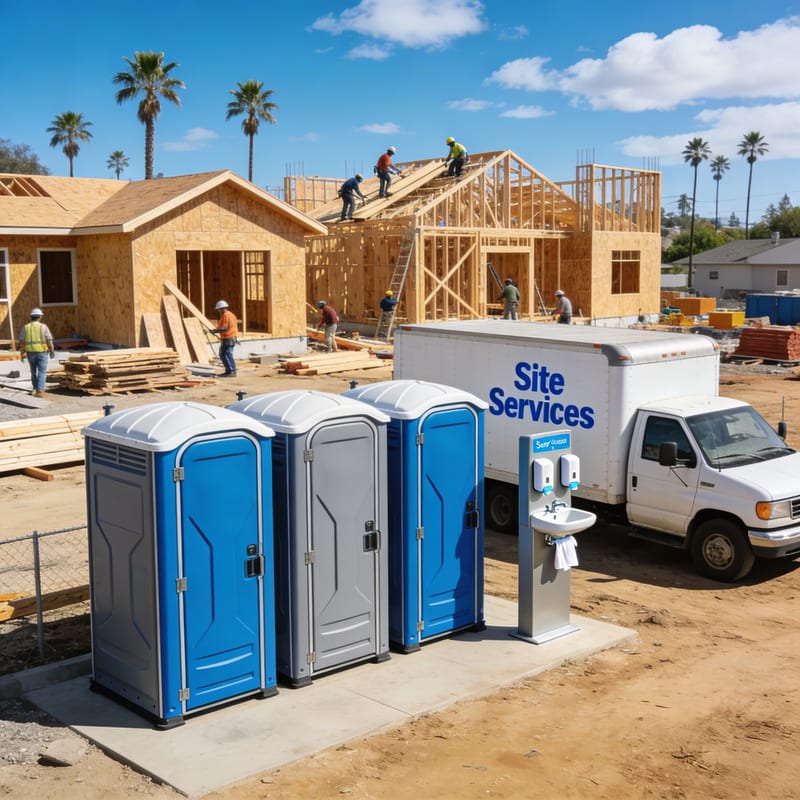
Portable Toilet Rental
Portable restrooms for multi-day job sites. Required or expected on projects without existing facilities.
Do It Yourself
- 1Search 'portable toilet rental [your city]' and compare 3 providers. United Site Services, Andy Gump, and local companies. Get monthly rates including weekly servicing.
- 2Standard portable restroom: $125-$200/month includes weekly cleaning and pump-out. Add a hand wash station ($50-$75/month) — required by OSHA if no running water on site.
- 3For longer projects (3+ months), negotiate a discounted rate. Most companies offer 10-20% off for multi-month commitments.
- 4Place the unit on level ground, near the work area but not blocking access routes. Position the door facing away from the street or client-visible areas for professionalism.
- 5Cal/OSHA requires toilet facilities within a 'reasonable distance' for all workers. The general rule: 1 unit per 10 workers for single-shift projects.
- 6Include portable toilet rental in your project bid. It is a legitimate job cost that clients expect on multi-day projects. Typical cost: $150-$250/month per unit.
 60
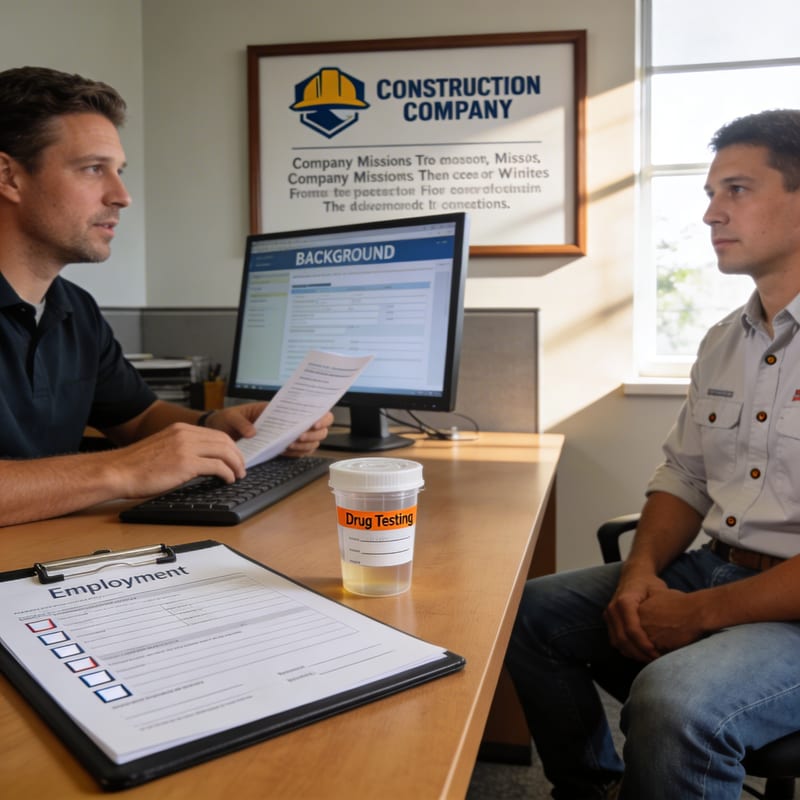
Background Checks & Drug Testing
Checkr, GoodHire, Sterling for employee screening. Important once contractors have employees entering customers' homes.
Do It Yourself
- 1Decide what you need: basic identity/criminal check ($20-$40), comprehensive check with employment verification ($50-$80), or drug screening add-on ($30-$60).
- 2Sign up directly at Checkr.com or GoodHire.com. Both offer pay-per-check pricing with no monthly minimums. Create an employer account in 10 minutes.
- 3Understand California's Fair Chance Act ('Ban the Box'): you CANNOT ask about criminal history on a job application. You can only run a background check AFTER a conditional offer.
- 4California also limits what criminal history you can consider: convictions only (not arrests), and you must conduct an individualized assessment considering the nature/gravity of the offense, time elapsed, and job relevance.
- 5For drug testing: use a local occupational health clinic or Quest Diagnostics/LabCorp. Many offer employer accounts with negotiated rates ($35-$65 per test).
- 6Keep all background check results confidential and in a separate file from the employee's personnel file. This is required by federal law (FCRA) and CA state law.